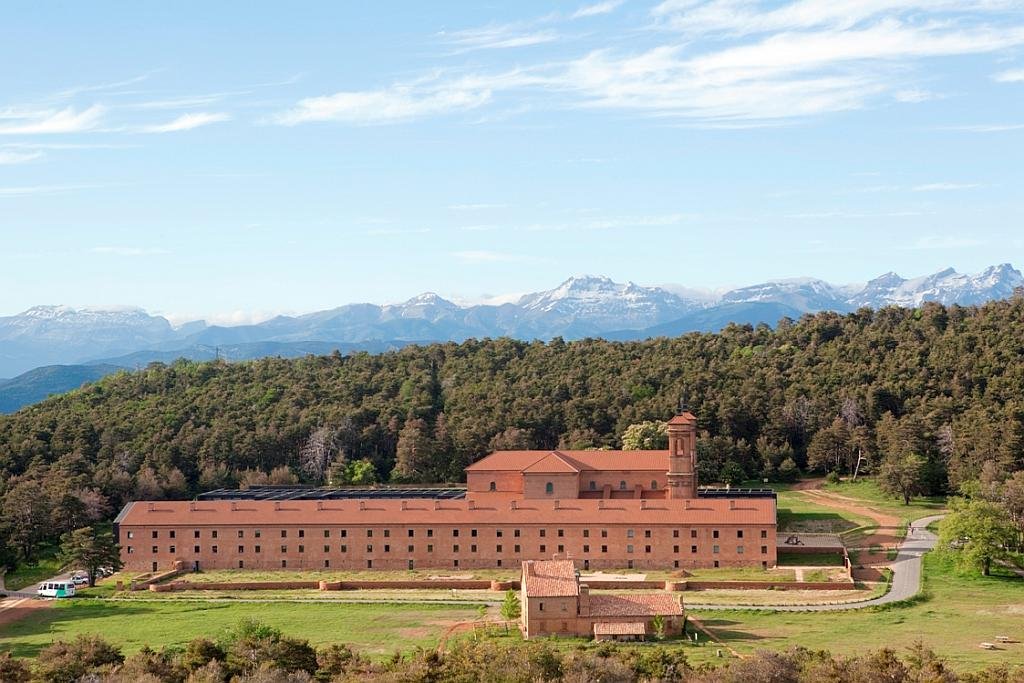
- Declared a site of national interest: 1920.
- Declared protected nature area: 2007.
- Protected landscape area: 9514 hectares.
- Nearby towns and villages: Botaya, Bailo, Caldearenas, Jaca, Las Peñas de Riglos, Santa Cilia and Santa Cruz de la Serós.
The protected landscape of San Juan de la Peña and Monte Oroel is located in the province of Huesca, Aragón. The two elements that stand out the most are those to which its own name refers: the monastery of San Juan de la Peña and the Oroel rock .
In 1920 the place where the monastery is located was declared a Natural Site of National Interest, being one of the first to obtain this declaration in Spain. In Aragón it has been defined as a protected landscape since January 23, 2007 and it is also a SCI and ZEPA .
The Peña Oroel can be divided into two main formations: the Sierra de San Juan de la Peña, with a maximum altitude of 1550 meters above sea level, and Mount Oroel, which reaches 1770 meters. The conglomerates stand out, sedimentary rocks of the detrital type formed by bouldersand containing ridges and escarpments.
Find a hotel in the Protected landscape of San Juan de la Peña and Monte Oroel
Hosteleria Santa Cruz offers a quiet retreat in the village of Santa Cruz de la Serós and sits just a short drive from the Royal Monastery of San Juan de la Peña. The hotel blends rustic charm with practical comfort, making it a convenient base for travellers exploring the area’s mountain scenery and historic sites.
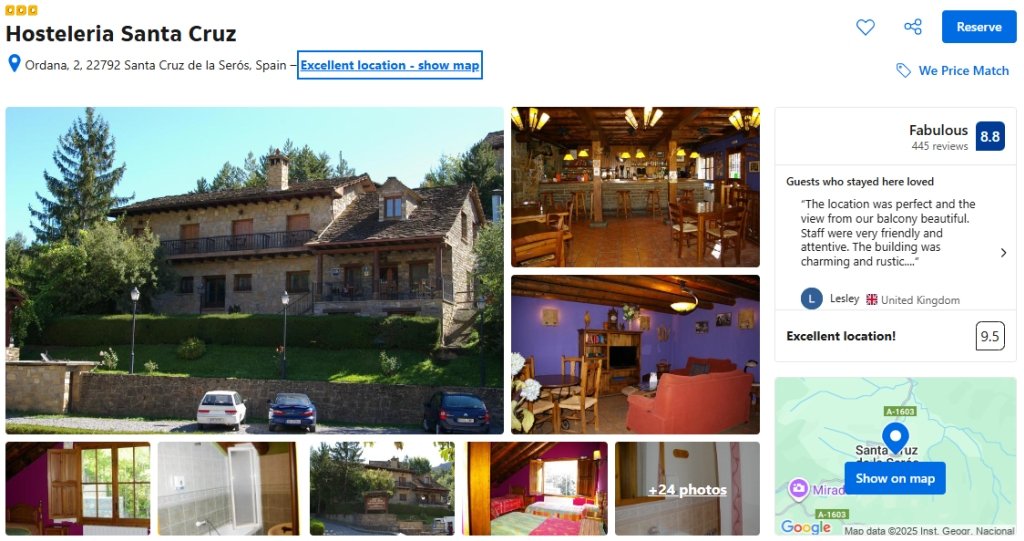
Things To Do In The Area From Get Your Guide
The region offers a wide mix of outdoor adventures and cultural experiences, with GetYourGuide featuring options like bike hire, snowshoeing, and guided day trips from Zaragoza. Visitors can explore mountain trails, discover historic sites, and enjoy curated excursions that make it easy to see the best of the surrounding landscape without needing local knowledge.
Fauna and Flora
Vegetation varies according to the altitude as in the lower areas you can find gall oaks and holm oaks as well as a scrub forest made up mainly of boxwood, gorse and hedgehog broom. Higher up we find pines, beech, fir, yew and maple.
The two formations constitute a mid-mountain ecosystem. The forests are dense and there are conglomerate escarpments that serve as an excellent refuge for colonies of raptors. keep an eye out for the bearded vulture, egyptian vulture, golden eagle, griffon vulture and peregrine falcon.
Royal Monastery of San Juan de la Peña
The Royal Monastery of San Juan de la Peña located in Botaya, southwest of Jaca was the most important monastery in Aragón in the high Middle Ages. In its Royal Pantheon a good number of kings of Aragón are buried. It is also an important part of the Aragonese way of the Camino de Santiago.
Best viewpoints in the area of the Protected landscape of San Juan de la Peña and Monte Oroel
- Balcón de los Pirineos.
- Santa Teresa.
- San Voto.
- Peña Oroel.
Information Centers
Information about wildlife of the area can be found at the San Juan de la Peña Visitor Center next to the New Monastery of San Juan de la Peña (directions see below). This Centre includes excellent information about:
- Protected Natural Areas of Aragon.
- Geology of San Juan de la Peña.
- Forest masses and associated flora and fauna.
- History of Aragon.
Monastery of San Juan Interpretation Center
Built on the ruins of the “New Monastery” this center details the different aspects of San Juan de la Peña from its origins until the monks had to abandon the monastery in the 19th century.
Directions: Take the N-240 road Jaca to Pamplona and pass through the beautiful village of Santa Cruz de la Serós. A mountain road that starts from this village leads to the Old Monastery, and from there it is a further 1, 5 km more until the New Monastery and the Interpretation Centre.
Opening times
Autumn – winter: weekends and holidays, from 10:00 a.m. to 2:00 p.m. and 3:00 p.m. to 6:00 p.m.
Spring – summer: weekends and holidays from 10:00 a.m. to 2:00 p.m. and 3:00 p.m. to 7:00 p.m.
The website is here
https://www.monasteriosanjuan.com/
Frequently Asked Questions About San Juan de la Peña and Monte Oroel
The protected landscape is known for its dramatic conglomerate cliffs, dense forests, and the iconic Royal Monastery of San Juan de la Peña. Visitors often combine hiking routes with cultural stops because the area blends nature, medieval history, and striking mountain views. The mix of ecosystems and viewpoints, such as Peña Oroel, offers plenty more to discover within the full article.
Most travellers follow the N-240 from Jaca towards Pamplona before turning off at Santa Cruz de la Serós. A winding mountain road leads first to the Old Monastery and then another short stretch continues to the New Monastery and Interpretation Centre. Parking is provided at both sites, and the route is usually well signposted, even on quieter days.
The mid-mountain environment supports varied vegetation and excellent raptor habitats. Bearded vultures, Egyptian vultures, golden eagles and peregrine falcons are often spotted circling the escarpments. Lower slopes hold oak and holm oak forests, while higher ground shifts to fir, beech and yew. A fuller breakdown of fauna and flora can be found in the main guide.
Travellers often base themselves in nearby villages such as Santa Cruz de la Serós, Botaya or Jaca. A popular option is Hostelería Santa Cruz, which provides a comfortable setting close to the monasteries and surrounding trails. Its location makes early-morning visits and late-day hikes much easier, though other accommodation is available across the region.
Balcón de los Pirineos, Santa Teresa, San Voto and Peña Oroel are well-known for sweeping views. Each offers different light conditions, so photographers often return at dusk or dawn to capture the colours over the Pyrenees and surrounding valleys. The uneven, cliff-lined terrain adds depth and atmosphere, which is why the viewpoints remain firm favourites among regular visitors.
Outdoor experiences such as bike hire, snowshoeing and guided day trips from Zaragoza are commonly available. These activities are helpful for travellers who want structured itineraries without needing detailed local knowledge. Some tours mix cultural stops with scenic walking routes, and more suggestions are explored in the main article for anyone planning a fuller itinerary.

Clive Muir – Wildside Holidays – Walking, wildlife and culture holidays in Spain
I’ve been living in western Andalucía for more than 20 years and spend much of my time researching and running English-language travel websites about Spain. My work covers destinations including Cádiz, Ronda, Grazalema and the Caminito del Rey, as well as Wildside Holidays, which focuses on walking, wildlife and nature travel in Spain.
Through Wildside Holidays, I share practical information about Spain’s natural parks, mountains, wildlife and walking destinations, drawing on many years of living and travelling in the country. The aim is to help visitors discover Spain’s natural landscapes responsibly and plan rewarding walking and wildlife experiences.