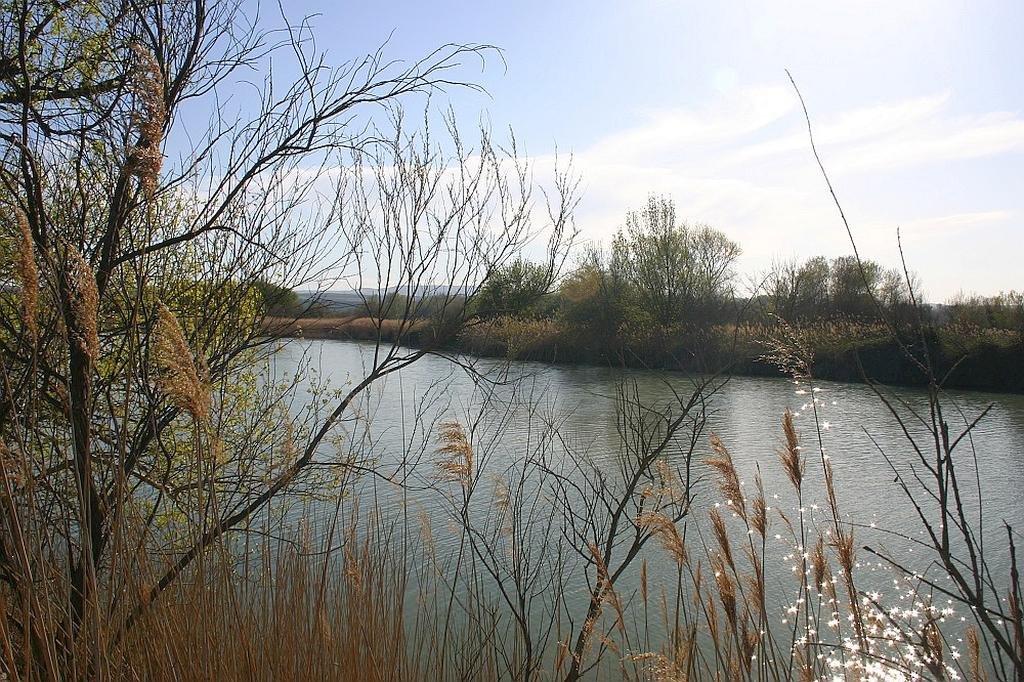
A bit of a mouthful even by Spanish standards but the Reserva Natural de los Galachos de la Alfranca de Pastriz, La Cartuja y El Burgo de Ebro is well worth a visit if you are in the area.
The nature reserve is located in the middle of the Ebro valley in the province of Zaragoza.
Also well worth a visit are the nearby villages of Alfajarín, El Burgo de Ebro, Fuentes de Ebro, Nuez de Ebro, Osera, Pastriz, La Puebla de Alfindén, La Cartuja Baja and of cource the city of Zaragoza.
A Galacho (Ox-bow lake in English – Resaca in the US and Billabong in Australia) forms when a river creates a meander, due to the river’s eroding bank. After a long period of time, the meander becomes very curved, and eventually the neck of the meander becomes narrower and the river cuts through the neck, cutting off the meander and forming an oxbow lake.

The typical vegetation of this ecosystem is mostly reed being the typical plant of the humid environment in addition to the presence of aquatic fauna and flora. Also providing an excellent habitat are poplars, tamarisk and willow.
The irrigation of the southern farmland of Zaragoza (Aragón), the artificial ponds of Saica and other artificially formed bodies of water, such as the Canal Imperial de Aragón and its pond create a large protected area for migratory groups of more than 1500 specimens of birds such as kites, crows, lapwing, rooks, seagulls, storks, vultures and starlings.
Find a hotel in Zaragoza close to the Reserva Natural de los Galachos de la Alfranca
Zaragoza is a great choice for combining a city break with easy access to the natural areas along the Ebro, including the Reserva Natural de los Galachos. Zaragoza blends culture and nature with ease and its compact layout helps you explore both without long travel times. In Zaragoza you are closer to river trails, bird-watching spots, and quiet parks that lead toward the Ebro’s protected zones.
Hotel Hiberus offers an excellent base for travellers who want easy access to Zaragoza’s Ebro-side nature areas, including the Galacho de Juslibol and the wider river trails. Its location near the Ebro and the expansive Parque Luis Buñuel places you close to walking paths, wildlife spots, and quiet green zones while keeping the city’s cultural highlights within easy reach. You can step out each morning ready for riverside hikes, bird-watching, or day trips to the protected wetlands east of the city. Find out dates and prices at Booking.com.

Information Centres
Interpretation Center of La Alfranca (Centro de interpretación de La Alfranca)
The Interpretation Centre for the Natural Environment of Aragón is located on the La Alfranca agro-environmental estate. Housed in the former Convent of San Vicente de Paúl, this centre aims to showcase the natural value of Aragón’s Network of Protected Areas, with special attention given to the nearby Directed Nature Reserve of the Sotos and Galachos of the Ebro.
Organised into several exhibition rooms, it includes a space featuring birdsong and representations of animals typical of the area. The centre also offers audiovisual displays, a 3D film, and both permanent and temporary exhibitions.
Location: Finca de la Alfranca is 15 km from Zaragoza, 2 km from Pastriz and 3 km from La Puebla de Alfind.
This centre has guided visits to the Galacho de la Alfranca
Getting There
By car: The drive from Zaragoza to La Alfranca is simple and well signposted. You leave the city via the Z-40 ring road, cross the Ebro, and take the exit towards Pastriz. From there, the CV-314 leads you through the village and directly to the estate. The route is straightforward, and once you reach Pastriz you’ll see clear signs guiding you to the La Alfranca visitor area.

On foot: Walking to La Alfranca and returning by bus gives you the best of both worlds: a peaceful riverside route on the way out and an easy ride back to Zaragoza when you’re ready to rest. The Camino Natural de La Alfranca leads you along the Ebro through open countryside, quiet tracks, and wildlife-rich stretches that ease you gently out of the city. After exploring the interpretation centre or the surrounding reserve, you can simply catch a local bus from Pastriz for a relaxed return to the city
Opening times
Autumn-Winter: Weekends and holidays from 10.30 a.m. to 2.30 p.m. and 3.30 p.m. to 6.30 p.m.
Spring-Summer: Weekends and holidays, from 10 a.m. to 2 p.m. and 4 p.m. to 8 p.m.
Other Things to do Whilst You Are in Zaragoza.
Zaragoza offers a mix of experiences that go beyond its historic landmarks. You can explore the city on guided walking tours through the old town, discover the local culture with tapas and food experiences, or dive into the world of freshwater species at the aquarium. For those seeking adventure, outdoor activities like paragliding or river excursions provide a chance to enjoy the surrounding landscapes. Whether you’re after history, cuisine, or nature, Zaragoza has something to keep every visitor engaged.
Frequently Asked Questions About the Reserva Natural de los Galachos
The Reserva Natural de los Galachos de la Alfranca is a protected wetland in Zaragoza’s Ebro valley. It features unique oxbow lakes, known as galachos, which form when the river cuts off meanders. Visitors enjoy bird-watching, riverside walks, and a rare glimpse of local aquatic flora and fauna. For a deeper exploration of its trails and wildlife, the article details the best times to visit and key spots along the reserve.
Reaching La Alfranca is straightforward by car, bus, or even on foot. From Zaragoza, the Z-40 ring road and CV-314 lead directly to Pastriz and the visitor centre. Walking along the Camino Natural de La Alfranca offers scenic riverside paths, while buses provide a convenient return. Full directions, including walking and cycling options, are covered in the article.
The reserve hosts many bird species, including storks, kites, lapwings, and crows. Aquatic plants such as reeds, poplars, and willow trees create rich habitats for fish and invertebrates. Seasonal migrations can bring even more species.
Yes, the Interpretation Centre of La Alfranca provides exhibitions, a 3D film, and guided tours. It’s housed in a historic convent near Pastriz and offers interactive displays about Aragón’s ecosystems. For more detailed opening hours, events, and guided visit options, check the full guide in the article.
Absolutely. Zaragoza is compact and offers easy access to the Ebro wetlands. Hotels such as Hotel Hiberus provide a convenient base, close to riverside walks and bird-watching spots, while keeping city attractions within reach. The article suggests travel tips, routes, and local highlights to make the most of a combined city and nature trip.
Beyond the wetlands, Zaragoza offers guided walking tours, tapas experiences, river excursions, and even paragliding. Cultural and outdoor activities make it easy to enjoy the city alongside nature. The article lists top recommendations and practical tips for planning a day in Zaragoza without missing the main natural attractions.

Clive Muir – Wildside Holidays – Walking, wildlife and culture holidays in Spain
I’ve been living in western Andalucía for more than 20 years and spend much of my time researching and running English-language travel websites about Spain. My work covers destinations including Cádiz, Ronda, Grazalema and the Caminito del Rey, as well as Wildside Holidays, which focuses on walking, wildlife and nature travel in Spain.
Through Wildside Holidays, I share practical information about Spain’s natural parks, mountains, wildlife and walking destinations, drawing on many years of living and travelling in the country. The aim is to help visitors discover Spain’s natural landscapes responsibly and plan rewarding walking and wildlife experiences.