- Region: Andalucia
- Province: Cadiz
- Declared a Natural Park: 1989
- Park surface area: 5.077 hectares (3.925 land plus 1.152 marine.)
- Declared a Zone of Special Protection for Birds: 2002
- Towns and Villages: Barbate, Vejer de La Frontera
Points of interest
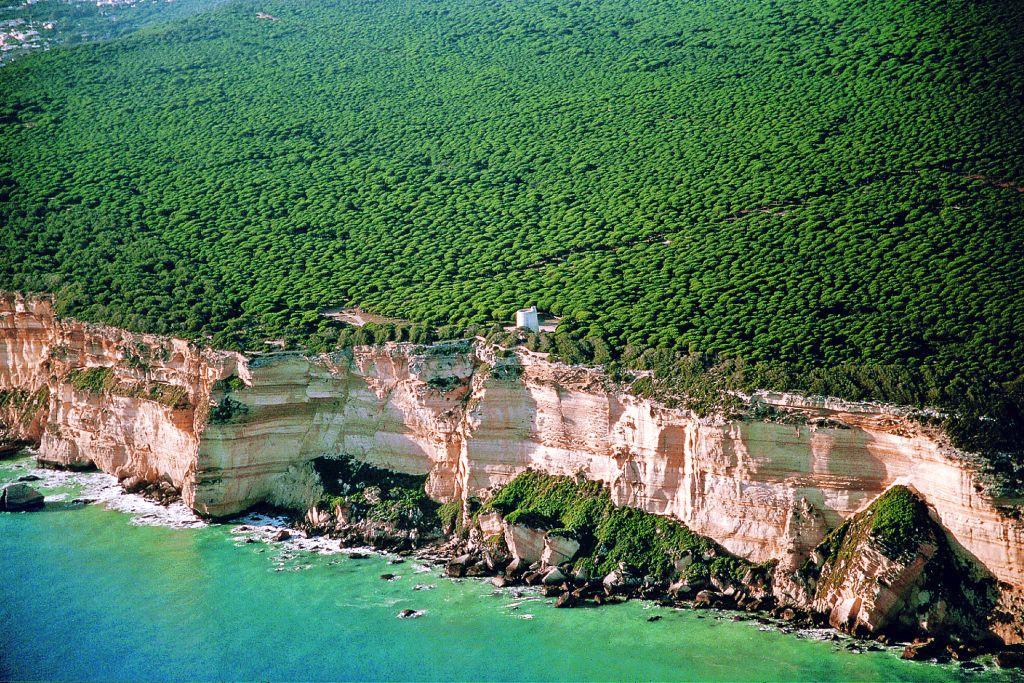
Halfway between The Bay of Cadiz and El Estrecho between Mediterranean and Atlantic waters is the La Breña y Marismas de Barbate Natural Park.
Although one of the smaller parks in Andalucia it has 28km of marked pathways and covers both land and marine areas. 100 metre cliffs drop vertically into the powerful Atlantic ocean. Above the cliffs is a dense woodland of Stone pines (Pinus pinea) which create a naturally rounded canopy of shade. As well as the pine woods and marine zone there are moving dunes and wetland where the Barbate river reaches the Shore.
Freshwater cascades fall from the cliffs and when the tide is out you can walk across the sand to see the caverns and waterfalls. (Be careful and always check tide times! )
Find a hotel in the area of La Breña y Marismas de Barbate
Barbate offers a wide range of accommodation options suited to different types of travellers. You’ll find modern hotels, cosy guesthouses, self-catering apartments, and private holiday homes, all providing easy access to the town’s beautiful coastline and relaxed Andalusian charm.
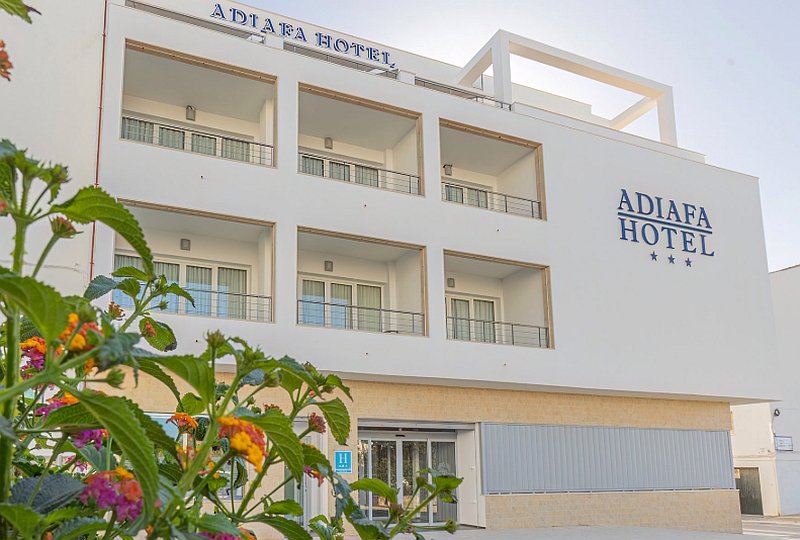
During my visit, I stayed in the Hotel Adiafa. Located just 50 metres from golden beaches and still very close to the city centre, this modern hotel features bright, airy interiors with views over the stunning coastline — a perfect balance between seaside relaxation and convenient access to everything Barbate has to offer.
Flora
Rosemary, European dwarf fan palm, Buckthorn (Rhamnus lycioides) and Phoenician junipers can be found as well as Stone pine and some Aleppo pines. At the cliff edge plants have formed dense cushions to cope with the Atlantic wind and salt spray. Seablite (Suaeda sp) and perennial glasswort (Arthrocnemum perenne) are plants that have adapted to survive these harsh conditions.
Also found here are European beachgrass, Sea Daffodil and Maritime Juniper (Juniperus oxycedrus ssp. Macrocarpa), the latter is in danger of extinction.
This news clip (in Spanish) shows some of the area around La Breña y Marismas de Barbate
Andalucia Directo were looking for the most beautiful place in 2018. This is their report for La Breña y Marismas de Barbate.
Marine environment
Seagrass beds are important nursery areas for juvenile fish and the plants help to stabilize the sediment. The offshore Kelp forests harbor many species of flora and fauna that find shelter, food and surfaces for attachment on the kelp and the surrounding rocky sea bed.
Trips from nearby Tarifa
Fauna
Cattle egret (Bubulcus ibis), Little egret (Egretta garzetta), Audouin’s gull (Larus audouinii) Herring gull (Larus argentatus), Kestrel (Falco tinnunculus) and Peregrine falcons (Falco peregrinus).
Many small birds live in the pine trees including Goldfinch, Chaffinch, Woodlark, Dartford Sardinian, Orphean Warblers, Hoopoe and Serin. Spoonbills, Night heron and Osprey may be seen at the marsh areas. Jackdaws and common starlings form colonies in the walls of the ancient watch tower and in cracks and ledges in the cliff.
This is one of the few remaining habitats for the Chameleon.
The Monarch butterfly (Danaus plexippus) is making a home for itself here. It is a large colourful butterfly that is a well documented migratory species through America. (They have also been recorded in Los Alcornocales and Marbella areas.)
Marine life includes, Cockles and Fine Clams also fish such as Sole, Eels, Mullet, Bass and Gilthead Bream.
Also in the area of La Breña y Marismas de Barbate
The Phoenicians caught their fish, salted the catch and exported them from this coastline. There are two watch towers, Torre del Tajo which looks out over the highest cliff and the second is close to Caños de Meca. These were built in the 17th and 16th century respectively.
Information/Visitors Centers
In the town of Barbate. ( Avenida del Mar. Puerto de la Albufera, dársena deportiva, s/n)
At the Parque Natural De la Breña y Marismas del Barbate information center you will find an exhibition with a large selection of articles relating to the natural environment: maps, books, souvenirs, etc.
In addition to this, the information center organizes all kinds of activities involving ecotourism: hiking, horse riding, guided tours to the manufacturers of preserved fish, bird watching routes, yoga sessions and lots of other activities of interest.
FAQs About Visiting La Breña y Marismas de Barbate Natural Park in Cadiz
La Breña y Marismas de Barbate Natural Park lies on the Atlantic coast of Cadiz province, between Barbate and Vejer de la Frontera. It sits halfway between the Bay of Cadiz and the Strait of Gibraltar, making it a fascinating mix of land and marine habitats. The park’s cliffs, pine forests, and wetlands are all within easy reach of the Costa de la Luz.
Despite being one of Andalucia’s smaller natural parks, it stands out for its dramatic 100-metre cliffs, dense pine forest, and protected marine zone. Visitors can explore dunes, marshes, and even waterfalls that appear at low tide. The combination of land, sea, and wildlife makes it a distinctive coastal ecosystem worth exploring in depth.
Birdwatchers will enjoy spotting herons, spoonbills, and peregrine falcons, while pine forests shelter warblers and hoopoes. The park is also one of the few places where the chameleon still thrives. In its marine area, seagrass beds and kelp forests support fish like bass and bream. More examples and seasonal sightings are shared in the full article.
Exploring some of the 28 kilometres of marked trails is a must, particularly routes that lead to the Torre del Tajo watchtower. Visitors can also go birdwatching, enjoy horseback rides, or join eco-tours organised by the park’s visitor centre. For something quieter, the pine forest paths and cliff-top viewpoints are ideal for photography and picnics.
Yes, the nearby coastline around Barbate and Caños de Meca features long sandy beaches with clear Atlantic waters. Swimming and water sports are popular, though the currents can be strong in some areas. The marine zone is protected, so always check local guidance before swimming or snorkelling. The article lists several recommended beaches close to the park.
Barbate offers a range of accommodation — from modern hotels like Hotel Adiafa, located near the beach, to family-run guesthouses and self-catering apartments. Many properties have sea views and easy access to walking routes and restaurants. Choosing to stay locally allows you to experience the area’s relaxed Andalusian atmosphere more fully.

I’ve been living in this lovely area of Western Andalucia for the last 20 years or so and dedicate most of my time to the running of English language tourist information websites for the towns of Cádiz, Ronda, Grazalema, the famous or infamous Caminito del Rey, and also Wildside Holidays, which promotes sustainable and eco-friendly businesses running wildlife and walking holidays in Spain. My articles contain affiliate links that will help you reserve a hotel, bus, train or activity in the area. You don’t pay more, but by using them you do support this website. Thankyou!