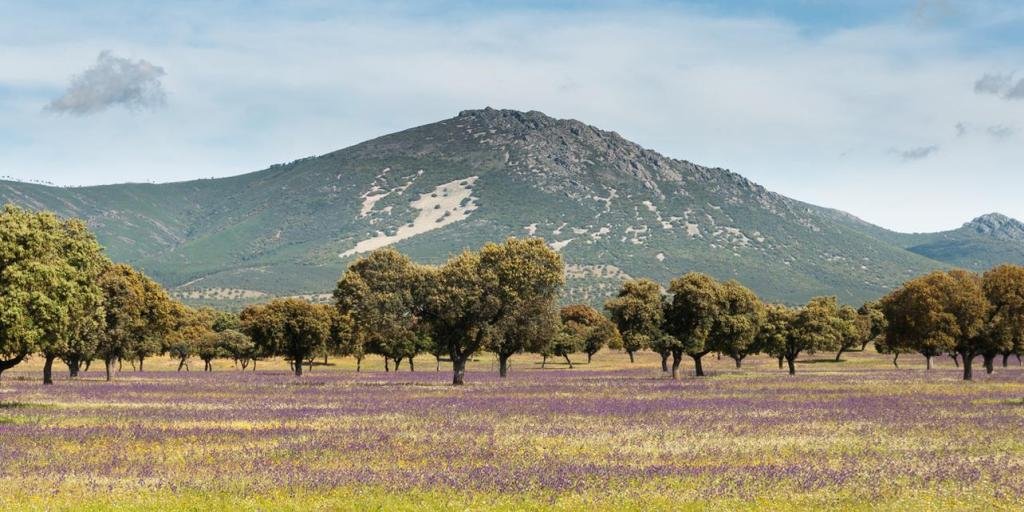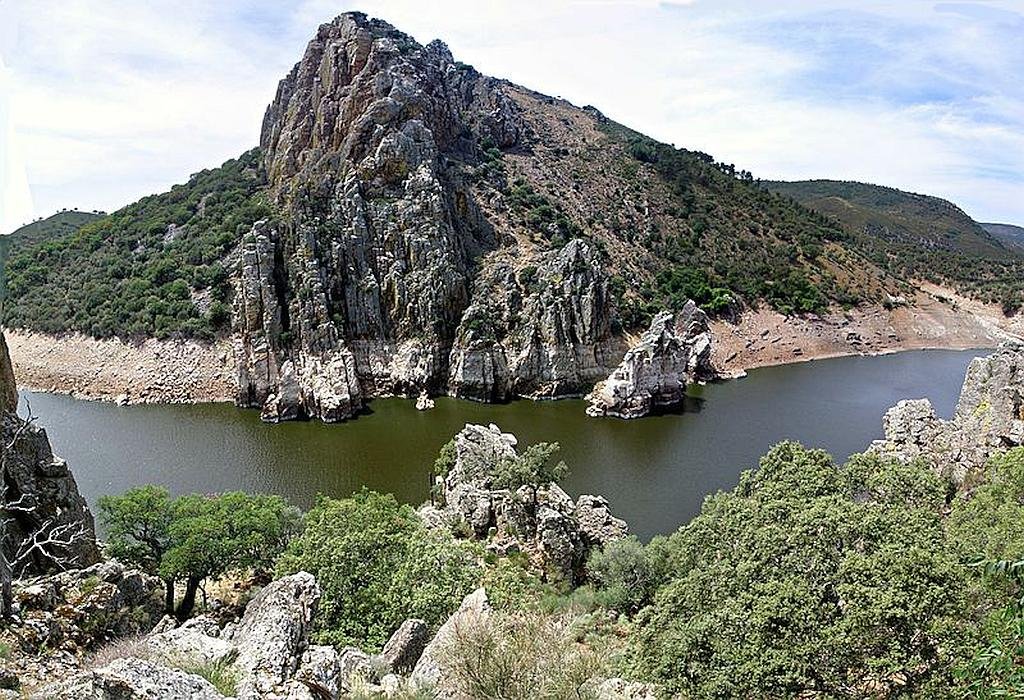
Monfragüe National Park

The area of Monfragüe National Park is noted for its importance as a breeding area for a selection of rare and protected birds,
  • Region: Extremadura
  • Province: Cáceres
  • Declared a Natural Park: 1979
  • Upgraded to National Park: 2006
  • Park surface area: 18.852 hectares
  • Z.E.P.A (1988) Special Bird Protection Zone
  • Biosphere Reserve 2003

Points of interest

The area of Monfragüe National Park is noted for its importance as a breeding area for a selection of rare and protected birds, Black vulture, Black stork, Imperial eagle and Bonelli’s eagle.

Add to that the worlds most endangered wild cat, the Lynx which also resides here and one can see why it was upgraded from a natural to a national park.

The park altitudes range between 450 – 750m, covering an area 30km long and 7km wide. The habitat types are oak woods, scrub land, rocky out crops, river and reservoir plus dehesa.

The area has also become famous as a starlight destination. The Starlight Foundation is a non-profit organization that was founded in 2009 to promote the protection of the night sky and the development of “astrotourism” and there is an ever growing list of starlight destinations in Spain to visit.

Read more

Hybrid rabbits in Spain

The Iberian rabbit

Farmers in Spain are protesting against the “hybrid rabbit”, a cross between domestic and wild rabbit species, which they claim is devastating crops and displacing native rabbits and hares. Protesters accuse the government of deliberately releasing the animal to repopulate endangered species, which has caused harm to the native rabbit and hare populations. The hybrids are larger, more voracious, have more offspring per litter and double the number of litters per year. Farmers have demanded a temporary hunting emergency declaration, a study to clarify when and how the rabbit appeared, and a ban on releasing domestic rabbits into populations of native rabbits. But before we get to the invasive hybrid rabbits in Spain lets have a look at the endemic ones!

Read more

Cork and its huge importance to the environment

“Dehesa” is the name given to these expansive areas of farmland consisting of groves of low density, mature oak trees.

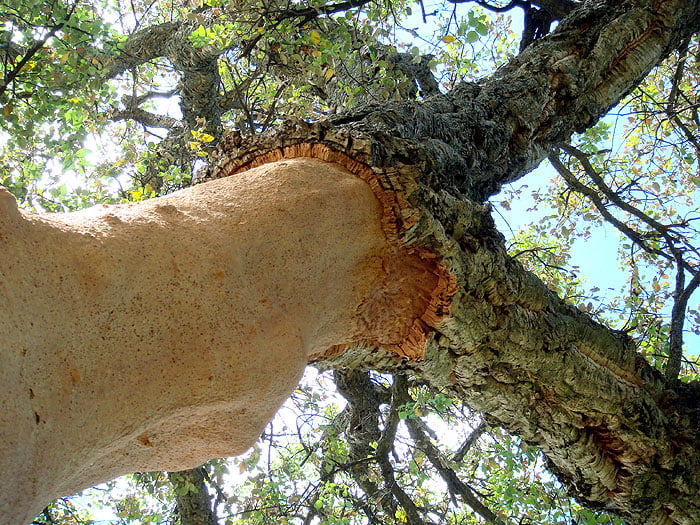
Quercus suber (Cork) is a type of evergreen oak tree native to the Mediterranean region. The tree has adapted to the problems of fire and drought in this area by growing a thicker bark as a protective layer. This outer layer of cork has many industrial uses and huge open forests have been developed to … Read more

Discover the breathtaking wildlife of Spain on an unforgettable guided or self guided holiday

The Cabañeros National Park (in Spanish: Parque Nacional de Cabañeros) is a NATIONAL park and is located within the two provinces of Ciudad Real andToledo

When it comes to wildlife, Spain stands as one of the top countries in Europe, boasting a remarkable array of landscapes, species, and conservation initiatives. With a remarkable number of UNESCO designated Biosphere Reserves, this country is leading the way in protecting its endangered wildlife, including the majestic brown bear and the elusive Iberian lynx. If you’re seeking a memorable walking holiday that combines the beauty of nature with guided or self-guided exploration, look no further. Here, Discover the breathtaking wildlife of Spain on an unforgettable guided or self guided holiday

Read more

Related Posts
  1. Coolest Places To Stay In London
  2. Unusual Day Trips From London
  3. Things To Do In London On A Budget
  4. London Expensive
  5. Hidden Places In London
  6. London City Trip Planner
  7. Best Shopping In London England
  8. Transport In London
  9. Best London Neighborhoods For Families
  10. First Trip To London