The story of an Iberian lynx killing feral cats in a small Spanish village has sparked outrage online. However, from my perspective at Wildside Holidays Spain, this reaction misses the point entirely. The return of the Iberian lynx is not a problem—it is a powerful sign that wild Spain is recovering.
In this article, I share my personal view on what is really happening and why we need to rethink our relationship with both wildlife and domestic animals.

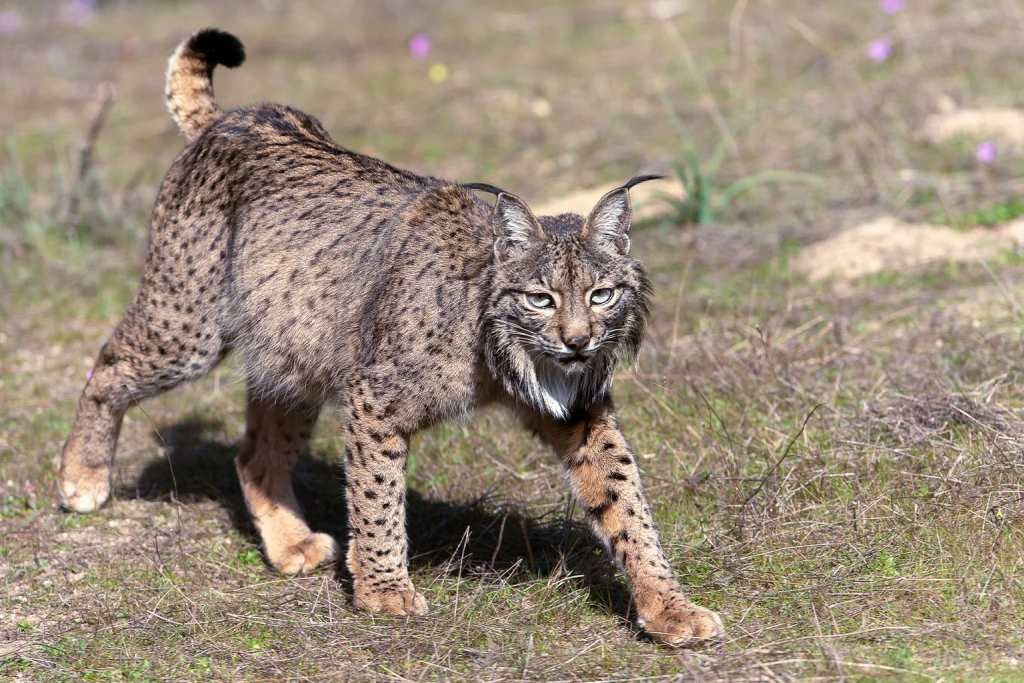
The Iberian lynx is doing exactly what it should
Let’s be clear from the start. The Iberian lynx is not “behaving badly”. It is not “out of place”. It is doing precisely what evolution designed it to do.
This is a top predator in a Mediterranean ecosystem. It hunts. It defends its territory. And yes, it kills other carnivores.
I spend a lot of time walking in the Spanish countryside. Out there, this is not shocking—it is simply how nature works.
We celebrate wildlife… until it behaves like wildlife
Here’s where things get uncomfortable.
- People love the idea of the Iberian lynx. It’s iconic. Rare. Beautiful. A conservation success story.
- But the moment it behaves like a predator, attitudes change.
- Suddenly, the focus shifts to protecting feral cats. Some even suggest controlling or removing the lynx. (That reaction says more about us than it does about the animal.)
- We want wild nature—but only on our terms.

Feral cats don’t belong in the wild
This is the part many people avoid saying.
Feral and free-roaming cats are not natural in these ecosystems. They are domestic animals introduced by humans, and they have a massive impact.
From what I see here in southern Spain, the impact is obvious:
- Fewer small birds in areas with high cat populations
- Reptiles disappearing from accessible habitats
- Constant pressure on small mammals
Across Spain, cats are estimated to kill huge numbers of wild animals every year. That far exceeds most other human-related impacts.
And yet, this rarely makes headlines.
Nature has its own balance—and the lynx restores it
When the Iberian lynx returns to an area, it changes everything.
It reduces populations of mid-sized predators, including foxes, feral cats and even the endemic wild cat. As a result, prey species begin a population recovery.

This is especially important for the European rabbit, which is essential not just for the lynx, but for many other species too.
So, while it may seem harsh in individual cases, the bigger picture is clear: the lynx improves ecosystem health.
The uncomfortable truth about “protecting” street cats
I understand that people care deeply about cats. I do too.
However, allowing cats to live on the streets is not kindness. It very often exposes them to:
- Disease
- Traffic
- Dog attacks
- Poisoning and mistreatment
On top of that, diseases such as feline leukaemia can spread from cats to wildlife. This has already caused serious problems for lynx populations in the past.
So the situation is not just bad for wildlife—it is bad for the cats themselves.
Laws don’t change how nature works
Spain’s Animal Welfare Law 7/2023 has added fuel to the debate.
It gives protection to feral cat colonies, which has led to the belief that they must remain where they are. However, this creates conflict when protected wildlife enters the same space.
Here’s the reality:
- The lynx is a strictly protected species
- It cannot and should not be controlled in this context
- Nature will not adapt to legislation
We need to adapt our expectations instead.
If we want wild Spain, we have to accept wild behaviour
This is where I stand, based on years of exploring and working in Spain’s natural landscapes.
The return of the Iberian lynx is something special. It tells us that conservation is working.
But it also comes with a responsibility.
We cannot celebrate biodiversity while ignoring the realities that come with it. Predators hunt. Ecosystems shift. Not every outcome is comfortable.
That’s part of having real, functioning nature again.
Conclusion: the solution starts with us
This is not a story about a dangerous lynx. It is a story about how we manage domestic animals in a landscape that is becoming wild again.
If we want to reduce conflict, the steps are simple:
- Keep cats indoors or in secure outdoor spaces
- Manage colonies responsibly
- Support conservation, even when it challenges us
Because in the end, the real success story here is not the loss of a few feral cats.
It is the return of a top predator to a landscape where it belongs.
Further Reading
Linces que matan gatos – Lince liberado. Programa de Conservación Ex-situ del Lince Ibérico. (In Spanish.)
FAQ: Iberian Lynx and Feral Cats in Spain
Feral cats may be targeted by the Iberian lynx because they fall within its natural territory and food chain dynamics. As a top predator, it does not distinguish between wild mesopredators and domestic cats living outdoors. More detail on this behaviour is explained in the article, especially in relation to how Mediterranean ecosystems naturally regulate carnivore populations.
Yes, it is entirely normal for apex predators such as the Iberian lynx to kill other carnivores. This behaviour is known as intraguild predation and occurs across many ecosystems worldwide. Foxes, smaller mustelids, and even other lynx species can be affected. The article explores how this actually helps maintain ecological balance rather than disrupt it.
Feral cats have been widely linked to significant declines in small wildlife populations, particularly birds, reptiles, and mammals. In Spain, their impact is increasingly discussed in conservation circles. While some populations are managed, many remain unregulated, leading to continuous pressure on biodiversity. The full article explains how this issue extends far beyond isolated rural encounters with lynx.
Coexistence is possible only in theory, but in practice it is highly unlikely. The Iberian lynx is territorial and will naturally exclude competing carnivores, including feral cats. When habitats overlap, one species tends to dominate. The article highlights how this dynamic has already been observed in several rewilding areas across the Iberian Peninsula.
Yes, feral cats can pose a serious indirect risk. Diseases such as feline leukaemia have previously been linked to outbreaks affecting wild carnivores, including lynx populations in southern Spain. Transmission risk is particularly concerning near human settlements where contact is more frequent. The article discusses past conservation challenges and how monitoring has helped reduce these threats.
The most effective approach is responsible pet ownership and limiting outdoor access for domestic cats. Keeping cats indoors or within secure outdoor enclosures significantly reduces wildlife conflict. While public debate often focuses on the Iberian lynx, conservation experts generally agree that managing human-introduced species is the more practical solution. The article explores why this approach benefits both wildlife and pets.

Clive Muir – Wildside Holidays – Walking, wildlife and culture holidays in Spain
I’ve been living in western Andalucía for more than 20 years and spend much of my time researching and running English-language travel websites about Spain. My work covers destinations including Cádiz, Ronda, Grazalema and the Caminito del Rey, as well as Wildside Holidays, which focuses on walking, wildlife and nature travel in Spain.
Through Wildside Holidays, I share practical information about Spain’s natural parks, mountains, wildlife and walking destinations, drawing on many years of living and travelling in the country. The aim is to help visitors discover Spain’s natural landscapes responsibly and plan rewarding walking and wildlife experiences.