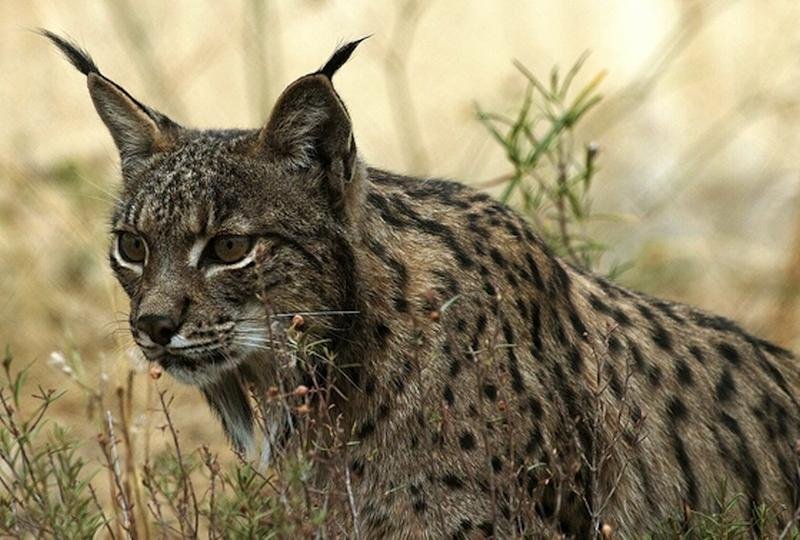
Conservation Success: Iberian Lynx Numbers Reach Historic High in 2024 census

Conservation Success: Iberian Lynx Numbers Reach Historic High in 2024 census

Some pretty amazing news from Spain and Portugal! A Conservation Success: Iberian Lynx Numbers Reach Historic High in 2024 census.

The total census of Iberian lynx now stands at 2,021 individuals. This includes 1,299 adults or subadults and 722 cubs born last year. After surpassing 1,000 specimens in 2020, the Iberian population has doubled in just three years.

Read about the Iberian Lynx here.

2023 census findings

The Iberian lynx (Lynx pardinus) census in Spain and Portugal for 2023 showed significant growth. The species has exceeded 2,000 specimens, a new record since detailed population monitoring began.

This is highlighted in the report by the Iberian lynx working group, coordinated by the Ministry for the Ecological Transition and the Demographic Challenge (MITECO). The group includes representatives from Spanish autonomous communities and the Institute for the Conservation of Nature and Forests (ICNF) of Portugal.

Distribution of lynxes

The report indicates a total of 2,021 lynxes, with 1,730 in Spain (85.6%) and 291 in Portugal. Four Spanish autonomous communities host stable populations. Andalucía has 755 specimens, 43.6% of the Spanish population. Castilla-La Mancha has 715 lynxes (41.3%). Extremadura has 253 specimens, and the Region of Murcia has seven.

Read more

Megarian banded centipede – Scolopendra cingulata – Escolopendra

scolopendra cingulata-escolopendra-megarian banded centipede

The Megarian banded centipede – Scolopendra cingulata – Escolopendra is one of the smallest members of the scolopendra family at approximately 10-15 cm. They are easily recognised by the alternating bands of black and yellow/gold. They can be found throughout southern Europe and typically inhabit dark, damp environments such as areas beneath logs and rocks. … Read more

Aesculapian Snake (Elaphe longissima or Zamenis longissimus) Culebra de esculapio

Aesculapian Snake (Elaphe longissima or Zamenis longissimus) Culebra de esculapio
  • Non-Venomous
  • Scientific: Elaphe longissima (Laurenti, 1768) or Zamenis longissimus.
  • English: Aesculapian Snake.
  • Spanish: Culebra de Esculapio.
  • Basque: Eskulapioren sugea.
  • Catalan: Serp d’Esculapi.
  • Family: Colubridae.
  • Distribution: northeastern Spain (mainly areas in or bordering Pyrenees), northern and central France, southern Switzerland, northern and central Italy, western Sardinia, and practically entire Balkans and central eastern Europe from eastern Austria and Slovakia southwards and eastwards, as far as Moldova

The Aesculapian Snake is a species of Elaphe, a genus of snakes traditionally found in Eurasia, northern Africa and North America, although some authorities have now split the genus into smaller groups. Some also consider Elaphe longissima to be a species of Zamenis instead, but the traditional species name looks set to be around for a while yet.

Read more

Discover Wildlife Watching in Spain: A Journey into Nature’s Heart

Wildlife watching in Grazalema

Discover wildlife watching in Spain and embark on an extraordinary adventure, where the wonders of wildlife await you. Delve into the heart of nature as you witness the splendor of our most cherished creatures in their natural habitats: the majestic brown bear, the regal Spanish imperial eagle, the awe-inspiring lammergeier, the elusive Iberian lynx, and the enigmatic Iberian wolf. Immerse yourself in magical experiences set amidst accessible landscapes and uncover the secrets of many successful conservation programs, dedicated to preserving these precious species.

Aiming for the Return of the Iberian Lynx in Aragón
Iberian lynx
Wildlife watching in Spain

In Spain, birdwatching becomes a thrilling pursuit, with the country’s strategic location between Africa and Europe attracting millions of migratory birds and boasting numerous globally unique species. Prepare to be captivated by the wealth of biodiversity that spans across the nation. With over 1,500 protected areas—comprising a quarter of the country—Spain offers unparalleled opportunities for exploration. Dive into the depths surrounded by fields of posidonia oceanica seagrass, sail alongside playful dolphins and majestic whales, and gaze upon the stars from breathtaking vantage points. The options are as diverse as they are enchanting.

Black Vulture - aegypius monachus - Birds and Birdwatching in Spain
Black Vulture – aegypius monachus

Journey through Spain’s national and natural parks and embark on an unforgettable odyssey. From the dramatic alpine landscapes to the lush Mediterranean forests, each park offers a unique experience tailored to every adventurer. Discover the beauty and magic of lakes, valleys, and mountains beyond your wildest dreams. Recognized by UNESCO for its abundance of biosphere reserves and geoparks, Spain stands as a beacon of environmental preservation and sustainable development. Within its borders you’ll find numerous Protected Natural Areas that adhere to the principles of the European Charter for Sustainable Tourism (ECST), ensuring a harmonious coexistence with nature.

The Natural Park of the Sierra de Grazalema - Walking and Wildlife Holidays in Spain
The Natural Park of the Sierra de Grazalema has also been declared a Biosphere Reserve, this is due to the diverse geography with high limestone mountains and deep gorges such as Garganta Verde

Read more

Related Posts
  1. Coolest Places To Stay In London
  2. Unusual Day Trips From London
  3. Things To Do In London On A Budget
  4. London Expensive
  5. Hidden Places In London
  6. London City Trip Planner
  7. Best Shopping In London England
  8. Transport In London
  9. Best London Neighborhoods For Families
  10. First Trip To London