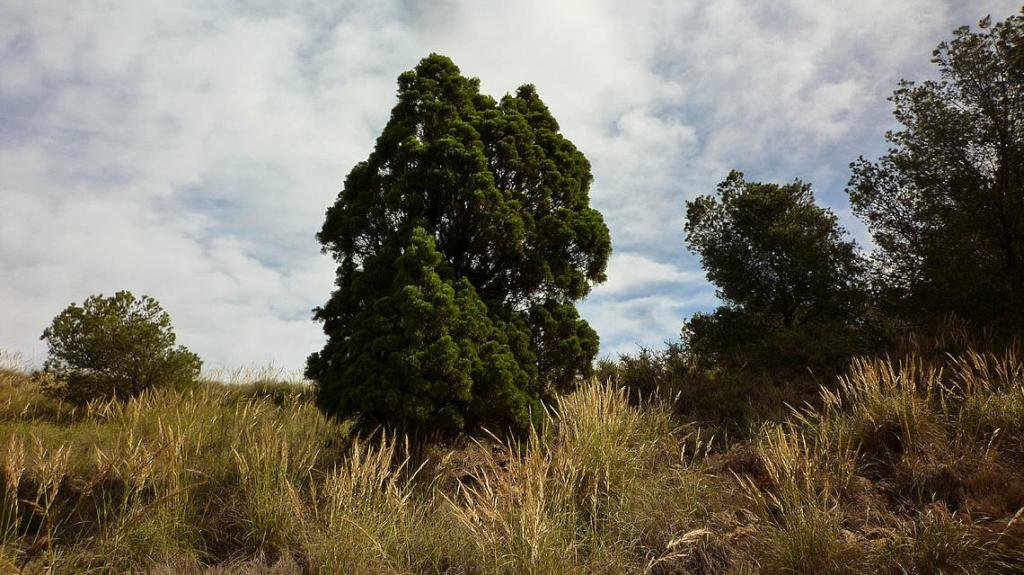
The Calblanque Monte de las Cenizas and Peña del Águila Regional Park (Parque Regional Calblanque, Monte de las Cenizas y Peña del Águila) is located near the Mar Menor and Cabo de Palos and almost the entire area belongs to the municipality of Cartagena.
The protected area presents a great ecological and environmental diversity with systems of dunes, sandy areas, salt marshes, salt ponds, coves. The Humedal de las Salinas de Rasall is located in the southern part of the lagoon.
Distribution: Iberia (excluding the northern Atlantic coastal stretch.) Algeria, France, Gibraltar, Italy, Morocco, Portugal and Tunisia
The Large Psammodromus – Psammodromus algirus – Lagartija Colilarga can have a body length of up to 9cm with a slender tail that is two or three times longer. Its back is a soft brown with two pale yellow or off white stripes running down each flank. The back legs up to the beginning of the tail are a soft orange colour, all of this helps them to blend well with fallen leaves and soil shades under bushes which is where they are normally seen. This can be in forests, woods or more open scrubland but generally not far from shrubs that they can hunt through and use as shelter.
Distribution Iberia: Found throughout all Portugal and much of Spain, including the Pyrenees but excluding the northern Atlantic region and the dry central interior, though present in the south.
Further distribution: UK mainland and Ireland, France through Germany, Switzerland, Denmark and southern Swedish coastal regions to Poland, Belarus, Ukraine and the Baltic states, and also in Northwest Africa and west Asia. In the UK and Eire the species is restricted in its distribution and considered endangered. In Ireland, found only on the Dingle Peninsula, and distribution in the UK is almost restricted to coastal areas.
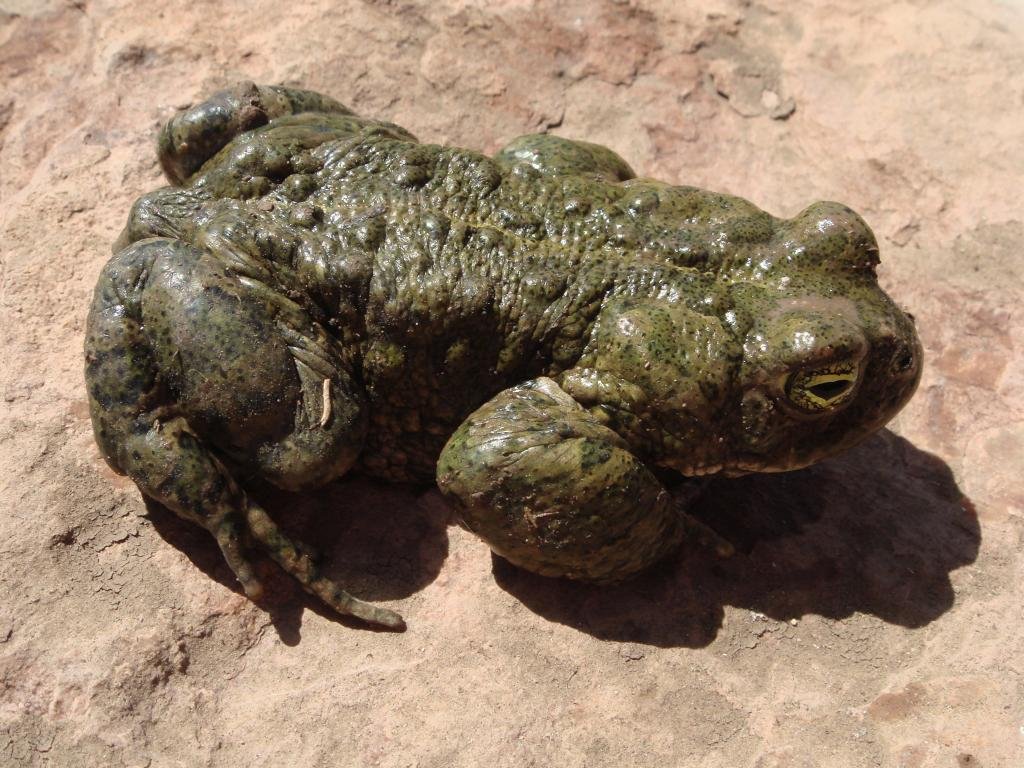
The Natterjack toad – Epidalia (Bufo) calamita – Sapo corredor is a species of Bufo, a large genus of so-called “true toads” traditionally found worldwide, although some authorities have now separated the Old World species from the New.
Description
Epidalia (Bufo) calamita is a medium-sized toad with a total maximum length of about 9-10cm in Iberia. (Elsewhere in Europe the species is smaller, males measuring 8cm and females 10cm). The head is wider than long, with a short rounded snout, and the area between the eyes is flat. The tympanum, measuring about half the diameter of the eye, is usually not visible, and if it is, only the front part can be seen.
Natterjack toad – Epidalia (Bufo) calamita – Sapo corredor with a faint yellow dorsal stripe
In the serene waters of Spain’s Ebro River, a growing menace lurks beneath the surface – invasive catfish. This article delves into the profound effects of these unwelcome guests and how invasive catfish impact the Ebro river ecosystem.
The Catfish Invasion
The invasion of catfish in the Ebro River is a story that began decades ago. In the early 1970s, these formidable creatures, known scientifically as Silurus glanis, were introduced into the Mequinenza reservoir by fishermen seeking a new catch. Their origin traces back to the Danube and Volga rivers in central Europe. These native habitats provided the catfish with ample space to grow and thrive, reaching staggering sizes. Reports from the 18th and 19th centuries describe specimens weighing up to a colossal 375 kilograms and measuring up to 3 meters in length.