Join the Iberia Nature Forum: Where Nature, Culture, and Community Thrive

Join the Iberia Nature Forum: Where Nature, Culture, and Community Thrive

Welcome to the Iberia Nature Forum, a vibrant online community where the heart of the Iberian Peninsula comes alive through discussions on nature, culture, and everything in between. Whether you’re a long-time member or someone considering joining, this article is an invitation to explore the diverse world of the forum, where we weave together threads of knowledge, curiosity, and shared experiences. Join us on this journey to discover what makes the Iberia Nature Forum an enriching destination for nature enthusiasts and inquisitive minds alike.

Download the Android app to your phone!

Read more

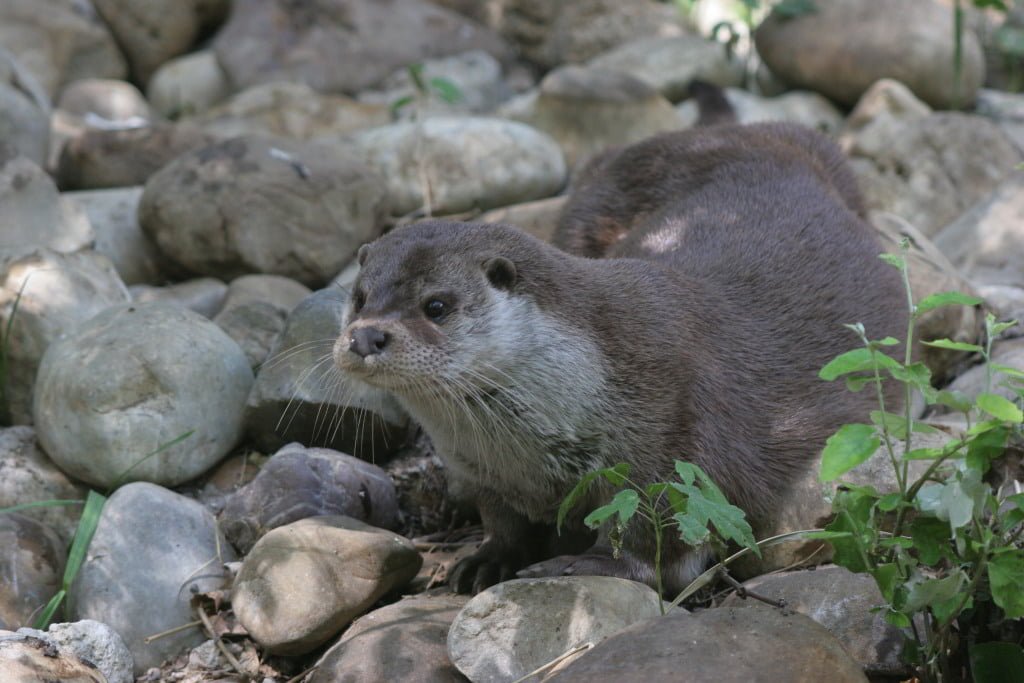
Otter – Lutra lutra -Nutria Europea.

The Otter - Lutra lutra -Nutria Europea (in Spain the European otter)

The Otter – Lutra lutra – Nutria Europea. A carnivorous mammal in the subfamily Lutrinae. They are semiaquatic in Spain with diets based mostly on fish and invertebrates.

Although most European otters tend to prey primarily on fish, some have developed a taste for frogs and toads—a food choice that requires some deft preparation. Because common toads (Bufo bufo) have toxins in both their skin and the glands on either side near the front of their bodies, these resourceful otters use their sharp teeth to remove the skin from the back half of the toads and then eat just the hind legs. While common frogs (Rana rana) don’t have toxic skin or glands, most otters appear to not know the difference, and generally play it safe by following the same food-prep routine they use on toads.

There is a brilliant photo of an otter with a frog on the website link below. https://www.biographic.com/frog-leg-feast/

A slow population recovery.

With the creation of many natural and national parks in Spain, and other environmental awareness campaigns, the otter population seems to have increased, certainly in Andalusia, over the past 20 years. However, this recovery has been relatively slow, and in some areas the impact of human activities still prevents the species, from expanding into new territory.

Read more

Estepa de los Monegros National Park

Despite its apparent barren landscape this natural area (The future Estepa de los Monegros National Park) is of ​​high ecological value, home to a rich biodiversity and represents one of the best semi-desert areas in all of Europe.

Despite its apparent barren landscape this natural area (The future Estepa de los Monegros National Park) is of ​​high ecological value, home to a rich biodiversity and represents one of the best semi-desert areas in all of Europe. The Sierra de Alcubierre mountain chain crosses the comarca from Northwest to Southeast. Its maximum elevation is … Read more

Hoces del Alto Ebro and Rudrón natural park

Hoces del Alto Ebro and Rudrón natural park
  • Region: Castilla y Leon. (Burgos)
  • Park surface area: 45,767 hectares.
  • Declared a Natural Park: 2008.
  • Special Protection Area for Birds (ZEPA).
  • Towns and villages in the area: Alfoz de Bricia, Basconcillos del Tozo, Los Altos, Sargentes de la Lora, Tubilla del Agua, Valle de Manzanedo, Valle de Sedano, Valle de Valdebezana, Valle de Zamanzas
Points of interest

The Hoces del Alto Ebro y Rudrón natural park is located in the northwest of the province of Burgos and presents a landscape of great beauty. Narrow valley bottoms wedged between steep gorges and cliffs are crossed by the Ebro and Rudrón rivers. These are in contrast to the extensive, almost flat moorlands located at higher altitudes.

A short clip showing the diverse landscape of the Hoces del Alto Ebro y Rudrón natural park
Hoces del Alto Ebro and Rudrón natural park

The Ebro River crosses the north of the province of Burgos from Orbaneja del Castillo to beyond Miranda de Ebro for 150 km in a succession of canyons (hoces) alternating with open valleys, as well as other natural elements in the surroundings that constitute an area of natural interest. The route of the river goes from west to east, but very sinuous, either because it ends up crossing a mountain massif in the most favorable place (dissolution of limestone rocks mainly) or because it forms meanders in the valleys.

Find a hotel close to the Hoces del Alto Ebro and Rudrón natural park

Booking.com
The Las Loras UNESCO Global Geopark

The nearby Las loras UNESCO Global Geopark is halfway between the Castilian Plateau and the Cantabrian Mountain Range. This transitional location gives the region the typical weather and environmental features of the surrounding regions. It also possesses a wide range of environments and biodiversity, with both Euro-Siberian sites as well as Mediterranean sites. In addition, the unusual topography resulted in a peculiar landscape where limestone cliffs and significant high altitude moorlands alternate with gorges and deep valleys created by the river system.

The Las Loras UNESCO Global Geopark
Waterfalls in the The Las Loras UNESCO Global Geopark

Read more

Related Posts
  1. Coolest Places To Stay In London
  2. Unusual Day Trips From London
  3. Things To Do In London On A Budget
  4. London Expensive
  5. Hidden Places In London
  6. London City Trip Planner
  7. Best Shopping In London England
  8. Transport In London
  9. Best London Neighborhoods For Families
  10. First Trip To London