
Walking and wildlife holidays in País Vasco
- Capital: Vitoria-Gasteiz
- Area: 7,234 km²
- Provinces 3: Viscaya, Guipuzcoa, Álava
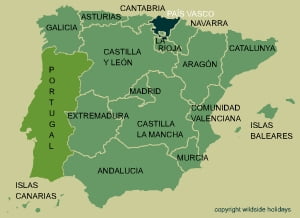
País Vasco is one of Spain’s most distinctive regions, combining Atlantic coastline, forested mountains and a unique cultural identity shaped over thousands of years. Although relatively small, its landscapes change dramatically, from the rugged cliffs of the Bay of Biscay to the limestone ridges of the interior and the wooded valleys stretching towards the Western Pyrenees.
Known as Euskadi in Basque, the region is made up of Bizkaia, Gipuzkoa and Álava, each offering its own mix of wildlife, walking routes and historic towns.
Mountains, forests and rivers
The Basque Country is an excellent destination for walkers who enjoy variety. Ancient beech forests, Pyrenean oak woodland, karst landscapes and dramatic coastal scenery all lie within a short drive of one another.
The Bay of Biscay forms the region’s northern boundary, while rivers such as the Nervión, which flows through Bilbao, and the Bidasoa, which forms part of the border with France, have helped shape both the landscape and its biodiversity. Together with the mountains and coastline, these habitats support an impressive variety of wildlife, from Griffon Vultures soaring above limestone gorges to woodland birds and migratory species passing through the region’s wetlands.
Basque culture and identity
The Basque Country has retained one of Europe’s most distinctive cultural identities. While Celtic, Roman and later Christian influences shaped much of the Iberian Peninsula, the Basque language, Euskera, and many local traditions have survived for centuries.
During the twentieth century, mining, steel production and shipbuilding transformed the region’s economy, particularly between 1900 and 1970. That industrial boom brought people from across Spain, helping create the bilingual character that still defines much of the region today.
Today, fishing, farming, tourism and world-famous gastronomy sit alongside modern industry, while traditional rural life remains an important part of the Basque Country’s character.
Find a hotel in the Basque country
The Basque Country offers a wide range of accommodation, from elegant beachfront hotels in San Sebastián to stylish city stays in Bilbao and peaceful rural guesthouses in the surrounding hills. Travellers can choose from luxury options near cultural landmarks like the Guggenheim Museum, family-run pensiones in historic seaside towns such as Hondarribia, and rustic agroturismos perfect for exploring natural parks. Check out places ideal for coastal walking here.
Tours in the Basque country from Get Your Guide
The Basque Country combines spectacular coastal scenery, mountain landscapes, world-famous gastronomy and a unique cultural identity. Whether you’re exploring Bilbao’s Guggenheim Museum, discovering San Sebastián’s pintxos culture or heading out to places like Gaztelugatxe and the Rioja Alavesa wine region, organised tours can be an easy way to experience some of the region’s highlights.
Natural parks in the basque country
The Basque Country’s nine natural parks protect some of northern Spain’s finest Atlantic forests, limestone mountains, deep river valleys and rugged coastal landscapes. Rather than covering every park in detail here, this guide highlights the region’s standout destinations, with dedicated guides for each park linked below.
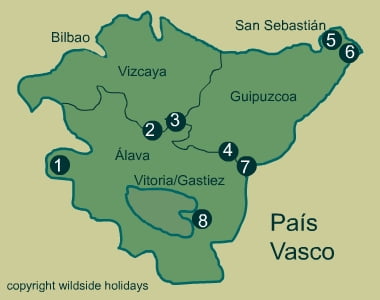
- 1. The Valderejo Natural Park (Parque natural de Valderejo) is one of the Basque Country’s quietest protected landscapes. Located in western Álava, close to the border with Castilla y León, it combines dramatic limestone gorges, ancient woodland and excellent opportunities to watch Griffon Vultures soaring above the valley. Access is easiest from La Lastra, where the visitor centre provides information on the park’s walking routes.
2. Gorbeia Natural Park is the largest protected area in the Basque Country, centred on Mount Gorbea, one of the region’s most iconic peaks. The mountain acts as a natural barrier to Atlantic weather, creating lush northern slopes and noticeably drier southern hillsides. That contrast supports an exceptional variety of mountain habitats, making Gorbeia one of the region’s best destinations for walking and wildlife. See places to stay in Gorbeia here.
3. Urkiola Natural Park is famous for its dramatic limestone scenery, where steep cliffs, karst landscapes and forested valleys create one of the Basque Country’s classic walking destinations. The combination of beech woodland, rocky ridges and open mountain pastures gives the park a distinctive character throughout the seasons.
4. The Aizkorri-Aratz Natural Park (Parque natural de Aizkorri-Aratz) is the second-largest protected area in the Basque Country and forms an important mountain corridor linking the Pyrenees with the Cantabrian Mountains. The park contains some of the region’s highest summits, including Aitxuri and Aizkorri, and is an outstanding destination for longer mountain walks through forests, limestone ridges and high pastures. Find places to stay near to Aizkorri – Aratz here.
5. The relatively small protected area of the Pagoeta Natural park is formed by two estates, Pagoeta and Altzola which belong to the Provincial Council of Guipúzcoa. The objective was to create a forestry experimentation area and enhance its natural value, restoring its hardwood stands and protecting its fauna and flora. It is located close to the coast and just 20 km from San Sebastián.
6. The Peñas de Aya Natural Park (Aiako Harria in Basque). From Roman times, ore such as silver bearing galena and lead was extracted from the Arditurri mines making them one of the most important ancient mines in Hispania along with Las Médulas mines in Leon and those of Cartagena or Rio Tinto. The mines were abandoned by the Romans in the 5th century, but were exploited again from the Middle Ages until the 1980’s for iron ore making them among the very few in Spain that have been in use for over 2,000 years almost without interruption.
7. In the Sierra de Aralar Natural Park between May and November, livestock, especially latxa sheep which provide the milk for Idiazabal cheese, dairy cattle and herds of wild horses graze the area whilst durng the winter months livesock is kept closer to the small villages in the area.
8. Located 31 kms from Vitoria-Gasteiz, Izki Natural Park is a vast forest area surrounding the Izki river and flanked by mountains on either side. Standing at 1,176 m, Kapildui is the highest peak and the area is home to Europe’s largest Quercus pyrenaica woodland, covering around 3,500 hectares. There are also wide areas of beech, Portuguese oak, silver birch, English oak and holm oak populations.
9. The Armañón Natural Park is the ninth and most recently declared protected area in the Basque country. Located in the region of Las Encartaciones in Vizcaya here you will find the Torca del Carlista cave which is one of the the largest underground systems in Europe and a refuge for the main breeding colony of the Mediterranean horseshoe bat.
Looking for guided or self guided walking in Pais Vasco?

Walking North Spain are located in San Sebastian in the heart of a fantastic area for holidays and mountain travel, trips and routes are arranged in most of northern Spain (Basque Country, Navarra, Western Pyrenees, La Rioja, Picos de Europa…), as well as in the French Basque Country and the French Pyrenees. https://wildsideholidays.co.uk/walking-north-spain/
Frequently Asked Questions about Walking and Wildlife Holidays in the Basque Country
The Basque Country, or País Vasco, is a distinct cultural region in northern Spain, bordering France to the northeast and the Bay of Biscay to the north. It’s made up of three provinces: Álava (home to the capital Vitoria-Gasteiz), Bizkaia (with the city of Bilbao), and Gipuzkoa (featuring the resort city of San Sebastián). The region is separated from the French Basque Country by the Western Pyrenees, giving it both mountainous terrain and coastal access. This location shapes its unique biodiversity, climate, and cultural traditions.
Walking holidays here offer a blend of nature, history, and culture. You can hike through forest-covered mountains, explore limestone ridges, and visit UNESCO-listed cities all in one trip. Many routes pass through protected natural parks, offering well-marked trails and local wildlife. You’ll also encounter prehistoric cave art, Roman roads, and Basque farmhouses. For those seeking coastal views, the Flysch Cliffs Route near Zumaia is a must. Inland, the Sierra de Aralar and Gorbeia Natural Park offer a rugged landscape rich in flora and fauna.
Wildlife varies with the landscape. In mountain parks like Aralar or Aizkorri-Aratz, you’ll find griffon vultures, wild boar, and roe deer. The latxa sheep are iconic, producing the milk for Idiazabal cheese. In forests like Izki, look for woodpeckers, red squirrels, and Europe’s largest stretch of Pyrenean oak. Rivers such as the Bidasoa and Nervión support amphibians, fish, and bird species. If you’re near the coast, especially around Urdaibai Biosphere Reserve, expect to see marshland birds and sometimes even ospreys.
There are nine major protected areas in the Basque Country, each with its own character:
Gorbeia Natural Park: The largest, known for high peaks, caves, and contrasting moist northern vs dry southern slopes.
Aizkorri-Aratz: Home to País Vasco’s highest peaks; ideal for serious hikers.
Urkiola: Offers dramatic limestone cliffs and dense forest trails.
Izki: A forest haven with ancient oaks and rare species—great for birdwatchers.
Valderejo: Less crowded, great for quiet nature hikes and vultures.
Pagoeta: Close to the coast, with botanical interest and traditional Basque farming culture.
Peñas de Aya: Rich in mining history and geological interest.
Sierra de Aralar: Known for transhumant grazing, wild horses, and scenic trails.
Armañón: The newest park, notable for karst caves and fossil-rich geology.
Each park is accessible by road and most have interpretation centres, marked trails, and info boards in Basque, Spanish, and sometimes English.
Absolutely. The region’s mix of mountains, coastline, forests, and rivers means there’s always something to explore. You can walk in complete silence across ancient highland pastures or watch seabirds on coastal cliffs. The geography changes quickly—from alpine valleys to rocky coves—so the variety keeps things interesting. Nature lovers will also appreciate the sustainable tourism ethos here: many rural stays and tours are eco-certified, and local guides are knowledgeable about geology, birds, and botany.
Basque culture is unique in Spain. The language, Euskara, is unrelated to any other in Europe and still spoken widely. The region has preserved its identity through centuries of resistance to outside influence. Food is central—pintxos, seafood, and cured meats dominate, and there’s a strong focus on seasonal, local produce. Festivals, sports (like pelota), and traditional music also thrive. Urban centres like Bilbao mix modern design (Guggenheim Museum) with historic quarters, while villages in Álava and Gipuzkoa showcase rural life and age-old customs.
Yes. The Basque Country has a wide range of rural accommodations, from agroturismos (farm stays) and converted monasteries to eco-lodges and forest cabins. Many are located near natural parks or walking trails. For example:
Stay in Zeanuri to access Gorbeia.
Use Oñati as a base for Aizkorri-Aratz.
Choose a guesthouse in Getaria or Zumaia for coastal trails.
Most places offer hearty Basque meals, local wine, and insider tips from hosts. Booking.com and local tourism boards list many of these properties, and Viator provides tours nearby.
About the author of this article.
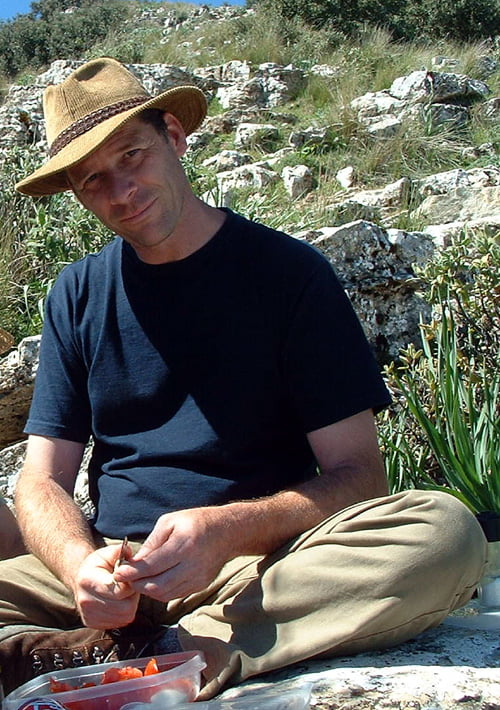
Clive Muir – Wildside Holidays – Walking, wildlife and culture holidays in Spain
I’ve been living in western Andalucía for more than 20 years and spend much of my time researching and running English-language travel websites about Spain. My work covers destinations including Cádiz, Ronda, Grazalema and the Caminito del Rey, as well as Wildside Holidays, which focuses on walking, wildlife and nature travel in Spain.
Through Wildside Holidays, I share practical information about Spain’s natural parks, mountains, wildlife and walking destinations, drawing on many years of living and travelling in the country. The aim is to help visitors discover Spain’s natural landscapes responsibly and plan rewarding walking and wildlife experiences.