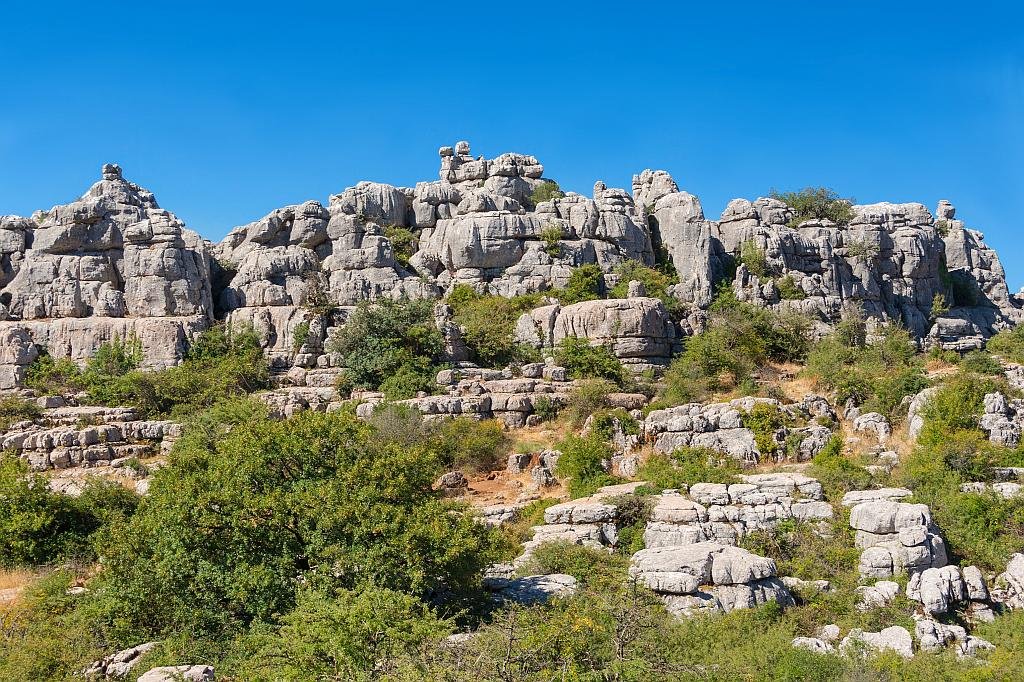
- Andalucia – Malaga province – Near Antequera
The dramatic and fascinating landscape of the El Torcal protected area is entrancing. Natural erosion has cut valleys and pathways through this enormous “rock garden” and created erratic sculptures in the process. Thin layers of rock stacked like pancakes are pinned down by massive blocks and this seemingly inhospitable terrain is host to many specialist rock loving plants.
This ‘Paraje Natural’ covers some 20 square kilometres of protected area and was first recognised for its singularity in 1929. The highest point in El Torcal is Camorro Alto at 1.378m above sea level.
Not too far away is the beautiful Cortijo Los Lobos – Rural mountain retreat in Villanueva del Trabuco with self catering holiday cottages, horseriding and stunning walking trails. Read more here: https://wildsideholidays.co.uk/cortijo-los-lobos-rural-mountain-retreat/
Getting There
There is only one road that leads into the parkland, it is accessed on the southern side of the mountain on the road between Antequera and Villanueva de la Concepción. This mountain road terminates at the visitors centre, Mirador (viewpoint) and car park from where the signposted walks begin. It is recommended not to wander away from the path as you can easily get lost amongst the rock formations.
Have a look at Get Your Guide for activities close to El Torcal protected area
Explore Torcal de Antequera: Guided Geological Tour with Expert Insights – La Garganta Activa
Discover the Torcal de Antequera on a three-hour guided walk led by an expert in geology. This UNESCO-listed karst landscape is one of Europe’s most striking natural sites, shaped over millions of years by the sea, wind, and rain. As you follow an exclusive circular route from the Torcal Alto Visitor Centre, you’ll learn how the area’s fantastical rock formations came to be and explore landmarks such as El Tornillo, El Sombrero and the maze-like passages of El Laberinto.
Along the way, your guide will reveal the Torcal’s rich flora, fauna, and cultural history, from ancient shepherd shelters to rare trees like the Montpellier Maple. With photogenic viewpoints, fascinating geological stories and a setting unlike anywhere else in Andalucía, this experience offers an engaging and educational day out for families, couples, and curious travellers alike.

An Ancient Sea Bed
This mountain was actually a sea bed during the Jurassic period and underwent great upheaval during the Tertiary period. Unusually the bedrock remained level whilst being elevated, creating an upland plateaux that is unique in southern Spain.
Natural erosion over centuries concentrates on weaker areas with wind, frost action and dissolution by rain water constantly shaping it anew. Silt is released during this erosion and deposits in the valleys as a clay base, forming seasonally damp meadows that contrast with the jagged cliffs of limestone.
These grassy areas hold a mixture of plant life such as celandines, narcissi, peonies, orchids, bluebells and thistles.
Where to stay close to El Torcal?
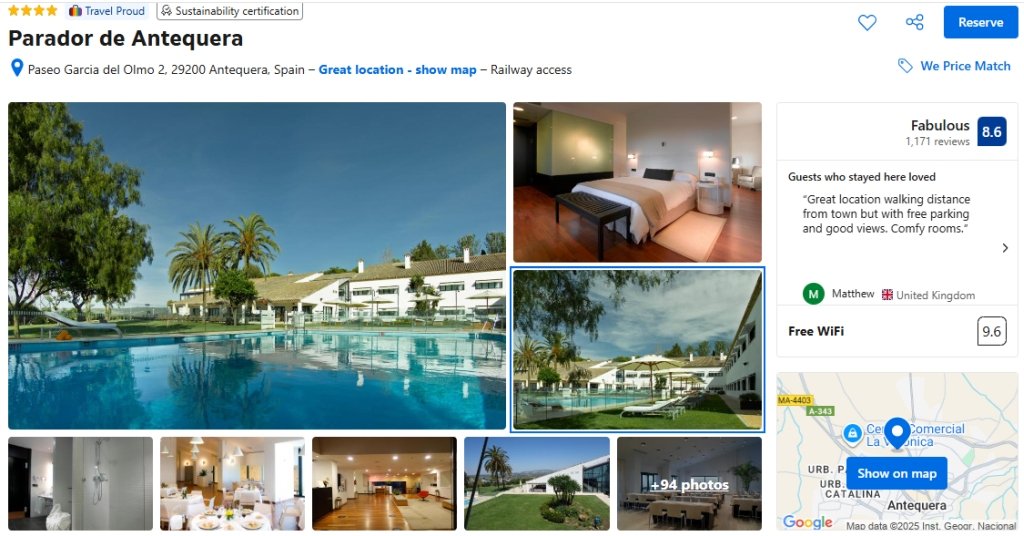
The Parador de Antequera is an excellent base for exploring El Torcal, located just 12 kilometres from the protected area. This modern hotel offers spacious rooms with countryside views, a seasonal outdoor pool, and an on-site restaurant serving traditional Andalusian dishes. Surrounded by gardens and set in a quiet part of Antequera, it provides a peaceful retreat after a day of hiking or sightseeing.
Flora
Trees that take hold in the more soil rich parts are: Evergreen oak (Quercus rotundifolia) and Kermes Oak (Quercus coccifera), Gall Oak (Quercus faginea), Wild Olive (Olea europaea sylvestris), Sorbus (Sorbus aria) and two forms of Acer (Acer monspessulanum, A. granatense). Climbing Ivy (Hedera helix) and Honeysuckle (Lonicera implexa) blanket some of the white cliffs in rich greenery.
Two rock dwelling plants have taken their names from this area, they are Linaria anticaria and Dianthus anticarius, both are limited to a small area in the Baetic mountain range. Anticaria as part of the name refers to the old Roman name for Antequera in whose municipality the parkland lies.


There are some plants within the park that are on the Red List of endangered species: Atropa baetica and Sarcocapnos baetica subsp. baetica are in danger of extinction, whilst listed as vulnerable are: Saxifraga biternata, Acer opalus subsp granatense, Acer monspessulanum and Sorbus aria.
Mediterranean plants mix with more common European plants such as: Hawthorn (Crataegus monogyna) and shrubby wild roses Rosa pimpinellifolia and Rosa sicula along with Lentisc (Pistacia lentiscus), Turpentine tree (Pistacia terebinthus), Dwarf European Fan Palm (Chamaerops humilis) and Strawberry tree (Arbutus unedo).
Fauna
The roughness of the terrain allows for many reptiles to go virtually undetected Ocellated Lizard (Lacerta lepida), Large Psammodromus (Psammodromus algirus) and Iberian Wall Lizard (Podarcis hispanica) you may see. Lataste’s Viper (Vipera latastei), Montpelier Snake (Malpolon monspessulanus) and Ladder snake (Elaphe scalaris) are much more timid.
Birds to look out for among the rocks are: Black Wheatear, Black-eared Wheatear, Red-billed Chough, Rock Bunting, Blue Rock Thrush, Black Redstart and Little Owl with wintering Alpine Accentors. Griffon Vulture, Eagles and Kestrels may be seen in the open skies while Eagle Owls find refuge amongst the cliffs.
Also in the area
The Dolmens of Antequera
The Antequera Dolmens Archaeological Site, included in the List of World Heritage Sites of Unesco, is made up of the Dolmens of Menga, Viera and El Romeral in Antequera, Malaga, and is considered one of the best and best-known examples of European megalithic complexes. Megaliths were the first forms of monumental architecture in European prehistory and were developed, according to data currently available, from the beginning of the 5th millennium BC, the Neolithic period, about 6,500 years ago.
The Caminito del Rey
“El Caminito del Rey”, in English, “The King’s little pathway”) was initially built as an access route. It enabled workers at the hydroelectric power plants of El Chorro Gorge and Gaitanes Gorge with an easier way to transport materials, maintain and inspect the workings of the two power plants. Construction of the “walkway” began in 1901 and was finished in 1905 and in 1921 King Alfonso XIII visited and walked along the path for the inauguration of the Conde del Guadalhorce dam and since that time it became known as the “Kings path”
More information here: https://www.caminodelrey.es/
Information centre at El Torcal protected area
Access to the “Torcal Alto Visitor Center” is free. The center has an interpretive area, multipurpose room, guide service, observatory, souvenir shop, restaurant, toilets and parking.
https://www.torcaldeantequera.com/en/
Getting there.
The most recommended access is through the city of Antequera. Once in Antequera, follow the signs to “El Torcal” or “Villanueva de la Concepción”, until you reach the A-7075 mountain road. After passing the sharp curves of the “Boca del Asno”, near kilometer 42, turn towards the “Centro de Visitantes Torcal Alto“. At the end of this narrow road, there is the destination.
The access road from Málaga is the A-45, towards Cordoba-Seville-Granada up to Casabermeja exit. Take this exit and go on by A-7075 until “Villanueva de la Concepción”. When you arrive to this small town, you should continue in direction of “Antequera” until you get to the detour the “Centro de Visitantes Torcal Alto”.
El Torcal Protected Area: Travel Guide, Wildlife & Visitor FAQs
El Torcal is remarkable for its dramatic limestone formations, sculpted by erosion over millions of years. The area was once a Jurassic seabed, later uplifted to form a rugged plateau filled with natural rock sculptures. Its unusual geological history and striking “stone garden” landscape make it one of Spain’s most fascinating natural sites. More about its evolution is covered in the main article.
The easiest route from Málaga is via the A-45 motorway towards Antequera. Exit at Casabermeja and continue along the A-7075 towards Villanueva de la Concepción, following signs to “Centro de Visitantes Torcal Alto”. The road climbs through sharp bends and scenic views before reaching the visitor centre and car park at the top.
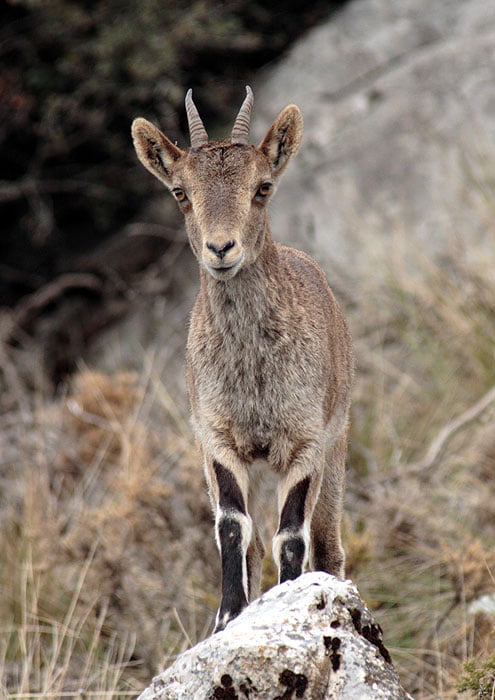
El Torcal is home to an extraordinary mix of Mediterranean and European flora, from evergreen oaks and wild roses to rare species like Atropa baetica. Fauna includes Iberian ibex, vultures, lizards, and even Lataste’s viper. Botanists and birdwatchers often visit for this reason — and the full article lists many endemic and endangered species found only here.
Yes, visitors can walk the well-marked trails starting from the visitor centre. However, wandering off-path isn’t advised due to the maze-like terrain. The official routes range from short, family-friendly circuits to longer hikes for experienced walkers. Guided tours are also available for those who prefer expert insight into the geology and biodiversity.
Visitors often combine El Torcal with the UNESCO-listed Dolmens of Antequera or the Caminito del Rey walkway — both within an easy drive. For a relaxing stay, the Cortijo Los Lobos mountain retreat near Villanueva del Trabuco offers horse riding, hiking, and self-catering cottages surrounded by Andalusian countryside.
Spring and early autumn are ideal, when wildflowers bloom and temperatures are pleasant for walking. Summers can be hot, especially at midday, while winters sometimes bring mist and frost, adding a mystical feel to the rocks. Each season offers a different atmosphere, making El Torcal worth visiting year-round.

I’ve been living in this lovely area of Western Andalucia for the last 20 years or so and dedicate most of my time to the running of English language tourist information websites for the towns of Cádiz, Ronda, Grazalema, the famous or infamous Caminito del Rey, and also Wildside Holidays, which promotes sustainable and eco-friendly businesses running wildlife and walking holidays in Spain. My articles contain affiliate links that will help you reserve a hotel, bus, train or activity in the area. You don’t pay more, but by using them you do support this website. Thankyou!
3 thoughts on “El Torcal Protected Area”