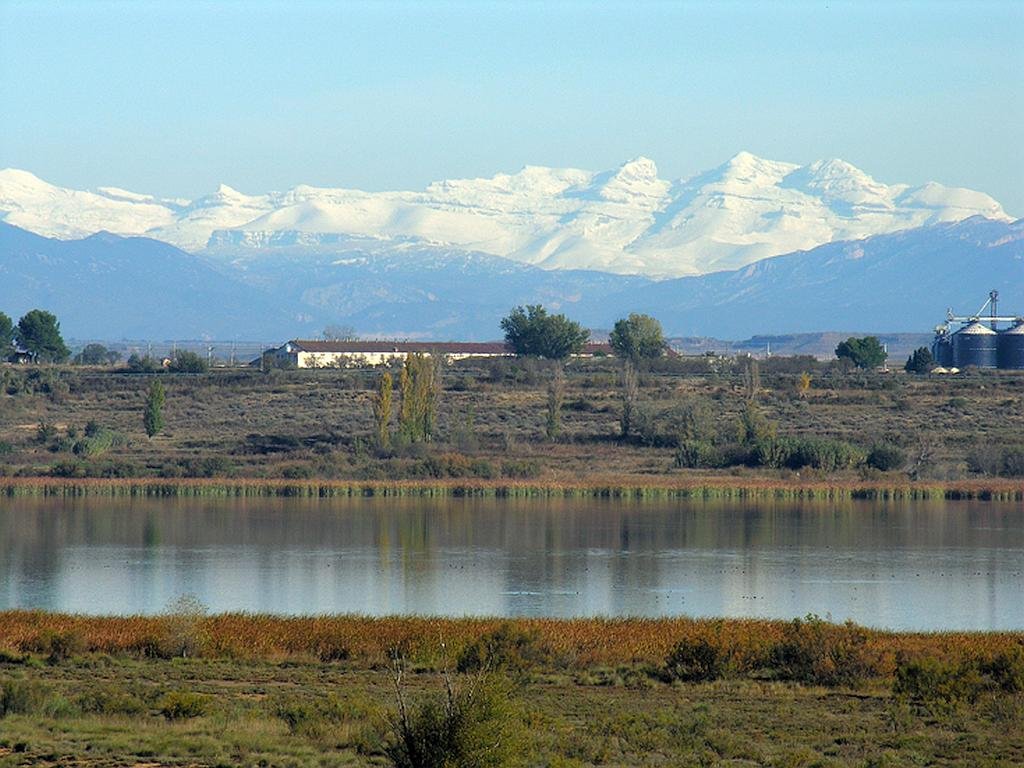
The Refugio de Fauna Silvestre de la Laguna de Sariñena (in Aragonese Refuchio de Fauna Silvestre d’a Lacuna de Sarinyena ) is a wildlife refuge located in Los Monegros in the south of the province of Huesca. The refuge, which has an area of 604 hectares was declared as a protected natural area for the first time on April 4 1995. It is located within the municipality of Sariñena between the basins of the Alcanadre and Flumen rivers. In 2001, the natural space was also declared a Special Protection Area for Birds (ZEPA) together with the other nearby lagoon of the Balsa de la Estación.
The Sariñena lagoon is endorheic meaning that its waters have a very high concentration of salts.
Intensive farming and using the lagoon water for irrigation during the 1970s caused the water level to drop dramatically and this in turn changed the saline concentration and the lagoon was in danger of drying up completely. However, a group of researchers and several naturalists proposed the construction of a drainage channel around the lagoon that would guarantee a similar level of water throughout the year. As a consequence of this successful campaign and work completed there is now a ring of reed surrounding the lagoon and numerous species of birds summer or winter in the environs.
This is one of the most important areas for birdlife in Aragón and serves as a shelter for numerous species of aquatic birds. It is considered to be the second most important wetland in Aragon, after the Gallocanta lagoon, and almost 12,000 birds spend the winter on its shores.
Find a hotel close to the Refugio de Fauna Silvestre de la Laguna de Sariñena
Zaragoza works well as a base for anyone planning a visit to the Laguna de Sariñena because it combines reliable transport links with the comfort of a larger city. The lagoon sits just over an hour away by car, so you can enjoy a peaceful day in a rich wetland environment and return to a place with plenty of dining, accommodation, and services. This balance makes it easy to blend nature excursions with the cultural attractions the city offers.

Some birds seen at the Refugio de Fauna Silvestre de la Laguna de Sariñena. (In no particular order).
- European Bee-eater – Abejaruco europeo – Merops apiaster
- Hoopoe – Abubilla – Upupa epops
- Golden Eagle – Águila real – Aquila chrysaetos
- Marsh Harrier – Aguilucho lagunero – Circus aeruginosus
- Stone Curlew – Alcaraván común – Burhinus oedicnemus
- Common Shrike (likely Red-backed Shrike) – Alcaudón dorsirrojo – Lanius collurio
- Mallard – Ánade azulón – Anas platyrhynchos
- Sandpiper (general; most common: Common Sandpiper) – Andarríos chico – Actitis hypoleucos
- Bittern (Eurasian Bittern) – Avetoro común – Botaurus stellaris
- Avocet – Avoceta común – Recurvirostra avosetta
- Long-eared Owl – Búho chico – Asio otus
- Griffon Vulture – Buitre leonado – Gyps fulvus
- Buzzard (Common Buzzard) – Busardo ratonero – Buteo buteo
- Purple Swamphen – Calamón común – Porphyrio porphyrio
- Great Tit – Carbonero común – Parus major
- Kestrel (Common Kestrel) – Cernícalo vulgar – Falco tinnunculus
- White Stork – Cigüeña blanca – Ciconia ciconia
- Quail (Common Quail) – Codorniz común – Coturnix coturnix
- Black Wheatear – Collalba negra – Oenanthe leucura
- Crow (Carrion Crow) – Corneja negra – Corvus corone
- Cuckoo (Common Cuckoo) – Cuco común – Cuculus canorus
- Raven (Common Raven) – Cuervo grande – Corvus corax
- Little Egret – Garceta común – Egretta garzetta
- Squacco Heron – Garcilla cangrejera – Ardeola ralloides
- Purple Heron – Garza imperial – Ardea purpurea
- Grey Heron – Garza real – Ardea cinerea
- Swallow (Barn Swallow) – Golondrina común – Hirundo rustica
- Spanish Sparrow – Gorrión moruno – Passer hispaniolensis
- House Sparrow – Gorrión común – Passer domesticus
- Tree Sparrow – Gorrión molinero – Passer montanus
- Jackdaw (Western Jackdaw) – Grajilla occidental – Coloeus monedula
- Goldfinch – Jilguero europeo – Carduelis carduelis
- Yellow Wagtail – Lavandera boyera – Motacilla flava
- Barn Owl – Lechuza común – Tyto alba
- Black Kite – Milano negro – Milvus migrans
- Blackbird (Eurasian Blackbird) – Mirlo común – Turdus merula
- Little Owl – Mochuelo europeo – Athene noctua
- Golden Oriole – Oropéndola europea – Oriolus oriolus
- Wood Pigeon – Paloma torcaz – Columba palumbus
- Linnet – Pardillo común – Linaria cannabina
- Shoveler Duck (Northern Shoveler) – Pato cuchara – Spatula clypeata
- Red-legged Partridge – Perdiz roja – Alectoris rufa
- Nightingale (Common Nightingale) – Ruiseñor común – Luscinia megarhynchos
- Great Crested Grebe – Somormujo lavanco – Podiceps cristatus
- Turtle Dove (European Turtle Dove) – Tórtola europea – Streptopelia turtur
- Swift (Common Swift) – Vencejo común – Apus apus
- Greenfinch (European Greenfinch) – Verderón europeo – Chloris chloris
Otters in the Refugio de Fauna Silvestre de la Laguna de Sariñena
Interestingly, this laguna and surrounding irrigation channels have a high concentration of otter. This is due to the abundant food supply of the introduced American red crab. Read more about otters in Spain here: https://wildsideholidays.co.uk/otter-lutra-lutra-nutria-europea/
Tourism, Ornithology and Nature Fair – AVENATUR
This biannual Fair (normally taking place in November) has been created by the Sariñena City Council to promote the conservation of the natural environment both locally and globally and also to promote ornithological tourism in Aragón.
Avenatur website: www.avenatur.com (In Spanish)
Things To Do In The Area From Get Your Guide
Zaragoza delivers a wide mix of experiences — from historic walking tours and tapas nights to family-friendly outings and even outdoor adventures. You can stroll through its old town with a guide to explore landmarks and learn local stories, join a tapas-bar tour in the evening to taste regional food, or visit the city’s large aquarium for a family-friendly outing. Moreover, the city serves as a launch pad for day-trips: you can explore countryside villages, discover olive-oil estates, or enjoy river rafting and mountain excursions in nearby natural areas.
Information Centres
There is an excellent interpretation centre in the town of Sariñena and I recommend you visit there before you visit the lagoon itself. The staff are very knowledgeable and will tell you all you need to know to get the best out of a visit. Inside the centre you will find:
- Audiovisual exhibitions.
- Recreation area with botanical garden.
- Bird Observatory at the foot of the Lagoon.
Check on the website for opening times here: https://www.rednaturaldearagon.com/centro-de-interpretacion-la-laguna-de-sarinena/
Frequently Asked Questions About Laguna de Sariñena Wildlife Refuge
The Laguna de Sariñena is one of Aragón’s key wetland sites, hosting almost 12,000 birds in winter. Species such as the European Bee-eater, Marsh Harrier, and Avocet can be observed. The surrounding reedbeds and maintained water levels create ideal conditions for both migratory and resident birds, making it a top destination for ornithologists.
The lagoon is just over an hour’s drive from Zaragoza, making it perfect for a day trip. Zaragoza offers good transport links, restaurants, and hotels like Hotel Palafox, which provide convenient bases for exploring the refuge and surrounding natural areas.
Interestingly, otters are common here due to the abundant food supply from the introduced American red crab. Visitors may also spot amphibians and small mammals in the wetland and irrigation channels. Wildlife enthusiasts will find more details on species and habitats inside the local interpretation centre.
Initially protected in 1995 and later declared a Special Protection Area for Birds in 2001, Laguna de Sariñena safeguards diverse wetland habitats. Efforts to stabilise water levels and prevent salinity changes have helped preserve its unique ecosystem. Learn more about conservation efforts at the interpretation centre in Sariñena.
Yes, the town of Sariñena hosts an interpretation centre with audiovisual exhibits, a botanical garden, and a bird observatory. Guided tours and local staff provide insights to help visitors make the most of their wildlife experience. Check the centre’s website for opening times and seasonal events.
The biannual AVENATUR Fair, organised by Sariñena City Council, highlights ornithology and environmental conservation. Held in November, it encourages sustainable tourism and local engagement. Visitors can combine the fair with a lagoon visit for a richer nature-focused experience.

I’ve been living in this lovely area of Western Andalucia for the last 20 years or so and dedicate most of my time to the running of English language tourist information websites for the towns of Cádiz, Ronda, Grazalema, the famous or infamous Caminito del Rey, and also Wildside Holidays, which promotes sustainable and eco-friendly businesses running wildlife and walking holidays in Spain. My articles contain affiliate links that will help you reserve a hotel, bus, train or activity in the area. You don’t pay more, but by using them you do support this website. Thankyou!