Grazalema, in the Sierra de Grazalema Natural Park in Andalucía, is famous for receiving some of the highest rainfall totals in Spain. In particularly wet years, annual precipitation can exceed 2,000 mm, putting this small mountain village among the wettest places on the Iberian Peninsula.
That reputation can be misleading for anyone planning a visit. Grazalema doesn’t experience endless rain throughout the year. Its position on the western edge of the Sierra de Grazalema creates an unusual mountain climate, with exceptionally heavy rainfall during certain weather systems, followed by long periods of sunshine and dry weather.
However, February 2026 provided a dramatic reminder of just how extreme the weather here can become. Exceptional rainfall overwhelmed the mountain’s natural drainage systems, causing extraordinary flows of water, flooding and the evacuation of Grazalema’s residents. I was among those evacuated.
This article explains why Grazalema receives so much rain, what its weather is like throughout the year, and what happened during the remarkable floods of 2026.
Read about the sierra de Grazalema here: https://grazalemaguide.com/blog/the-sierra-de-grazalema-natural-park/
Read about water in the Sierra de Grazalema here: https://grazalemaguide.com/blog/water-in-the-grazalema-natural-park/
Current weather in Grazalema
Exceptional rainfall in Grazalema: the 2022 and 2026 records
Grazalema has experienced some extraordinary rainfall events in recent years. On 14 December 2022, the village recorded 212.1 mm of rain in 24 hours, a remarkable total that attracted international attention.
Grazalema recorded 212.1 mm of rainfall in 24 hours on 14 December 2022, making it the wettest recorded location in the world that day.

However, the rainfall of February 2026 surpassed anything previously recorded by the local automatic weather station. During Storm Leonardo, AEMET recorded 577 mm in 24 hours on 4 February. This established a new record for the station and was one of the most exceptional daily rainfall totals ever measured in Spain.
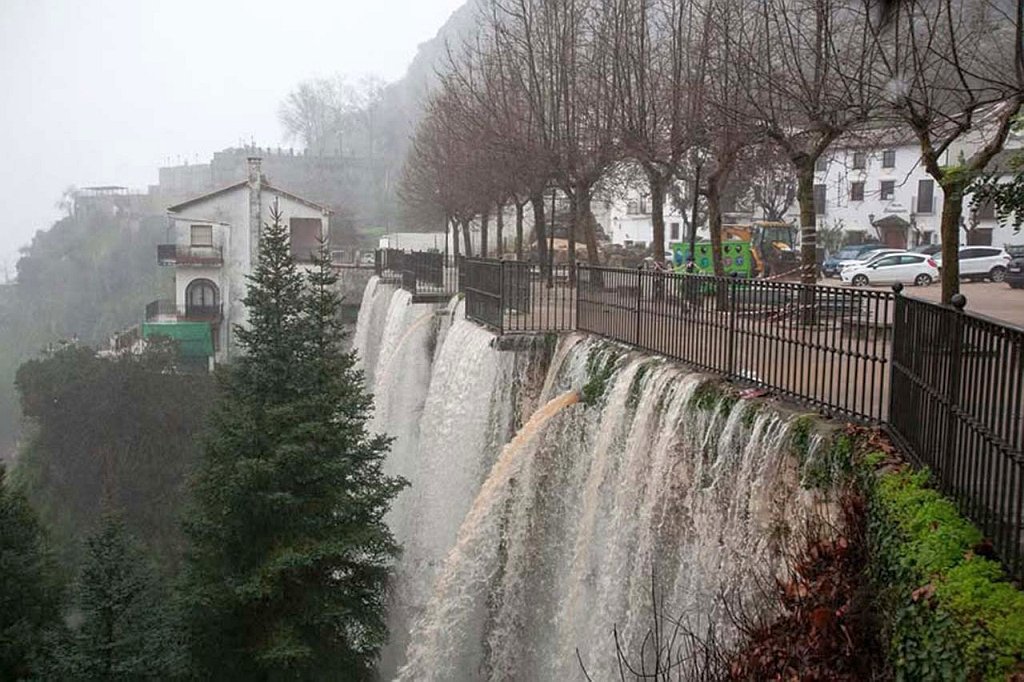
The wider rainfall episode was equally extraordinary. More than 2,500 mm fell in the Grazalema area over little more than three weeks, leaving the ground saturated and contributing to serious flooding throughout the village and surrounding countryside.
The February 2026 floods were unlike anything I had experienced in Grazalema. I was among the residents evacuated from the village. I’ve written a personal account of what happened, including the extraordinary movement of water through the village and the underground noises that caused so much concern.
Read my personal account of the Grazalema floods of February 2026.
How does Grazalema compare with the rest of Spain?
The wettest parts of mainland Spain are generally found in the northern Atlantic-facing regions, particularly Galicia, Asturias, Cantabria and the western Pyrenees. These areas receive substantial rainfall throughout the year, but Grazalema in Andalucía regularly competes with them for the highest annual totals.
AEMET’s historical rainfall records for Grazalema show an average of approximately 1,900 mm per year for the period 1991–2015. In especially wet years, totals can exceed 2,000 mm. Grazalema has also been recorded as Spain’s wettest municipality in individual hydrological years, including 2024–2025.


So is Grazalema the wettest place in Spain? It certainly has a strong claim in particular years and is exceptionally wet by Andalusian standards. However, there is no single permanent winner: rainfall totals vary considerably between years, and the result depends on which weather stations and measurement periods are compared.
Los Caños de Grazalema. Waterfalls after heavy rain
The limestone mountains above Grazalema contain an extensive network of underground fissures, caves and water channels. During prolonged periods of heavy rain, enormous quantities of water filter through the rock and recharge the underground aquifers. When these become saturated, the rising groundwater finds additional routes to the surface, emerging through cracks and openings in the mountainside.
Locally, this phenomenon is known as reventar los caños (literally, the springs or water outlets bursting). Water can suddenly gush from rock faces and fissures, sometimes creating spectacular waterfalls and powerful streams. One of the best-known examples is El Chocho de la Vieja, a local name given to a fissure beneath El Tajo. (It translates to “The old ladies fanny!”) 🙂
What makes Grazalema the wettest place in Spain?
The exceptional rainfall in the Sierra de Grazalema is largely explained by its geography. The mountain range lies close to the Atlantic coast and forms one of the first significant barriers encountered by moisture-laden winds arriving from the west and south-west.
As these humid air masses reach the mountains, they are forced upwards. The rising air cools, water vapour condenses and clouds develop, producing heavy orographic rainfall. This effect is particularly pronounced around Grazalema, where the mountain slopes intercept large quantities of Atlantic moisture.
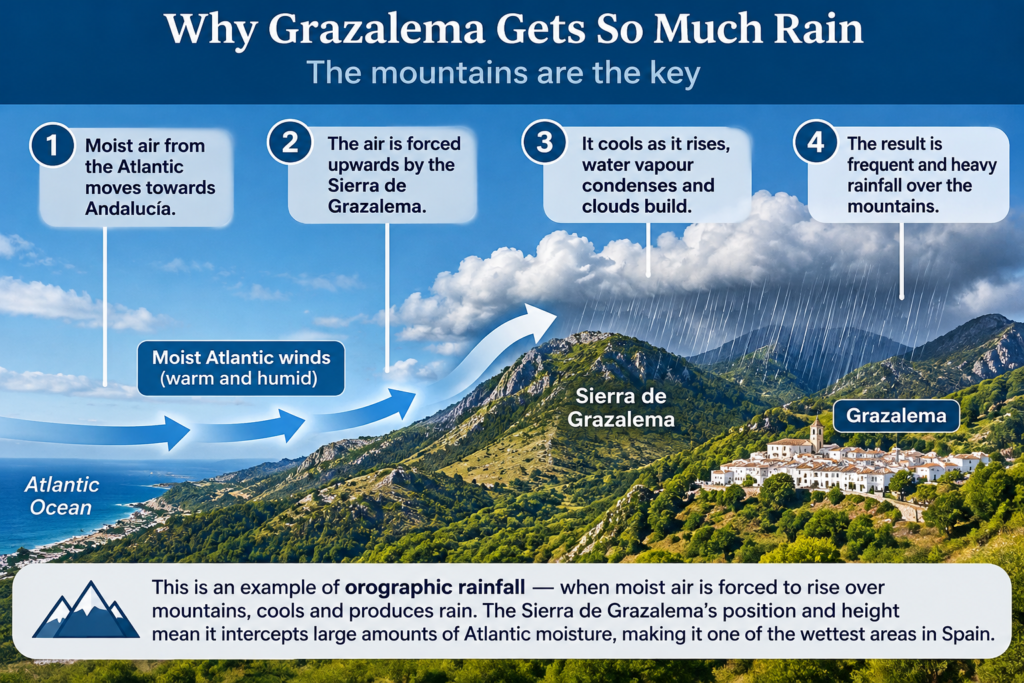
The result is a local climate that is remarkably different from much of the surrounding Andalucía. While nearby lowland areas may receive considerably less rain, the higher parts of the Sierra can experience enormous rainfall totals during Atlantic weather systems.
Check out the river Guadalete after a drop of rain!
How can the wettest place in the whole of Spain suffer a drought!
Grazalema’s exceptionally high rainfall does not mean that water is always readily available. Much of the Sierra de Grazalema is made up of limestone, a rock that is fractured and riddled with fissures, cracks and underground passages.
Rainwater can drain rapidly through these openings, feeding underground aquifers, springs and subterranean rivers rather than remaining on the surface. This is why the landscape can produce spectacular floods and powerful springs after heavy rain, yet still experience periods of water scarcity when rainfall is low.
The contrast is particularly striking during Andalucía’s long, hot summers. After months with little or no rain, water resources can come under pressure even in a place famous for its rainfall.
Here’s the weather forecast for Grazalema!
A slightly less conventional weather forecast from Grazalema! My children decided to become weather presenters during a torrential downpour, providing a rather entertaining demonstration of just how heavy the rain can get here.
Weather in Grazalema can change surprisingly quickly, particularly during the wetter months. A period of clear skies and sunshine can give way to increasing cloud, showers and sometimes torrential rain. Just as quickly, the rain can stop and the clouds begin to clear, allowing the sunshine to return.
This contrast is part of the mountain climate. Heavy downpours can produce dramatic changes in streams and rivers, while the strong Andalucía sunshine can dry exposed surfaces remarkably quickly once the rain has passed. It is always worth checking the forecast before heading out into the mountains, rather than assuming that a bright morning will last all day.
The varied climate and geology of southwest Andalucía help support an exceptional diversity of plants and wildlife. The Sierra de Grazalema is particularly rich in habitats, from damp limestone cliffs and wooded valleys to Mediterranean scrubland and open mountain slopes.
Its position between the Atlantic and Mediterranean influences, combined with its varied altitude and rainfall, creates conditions for species with quite different environmental requirements to live within a relatively small area. The result is one of the most botanically interesting parts of Andalucía, with the Spanish fir (Abies pinsapo) among its best-known natural treasures.
Does it snow in Grazalema?
Yes, it does snow in Grazalema, although significant snowfall is not an everyday occurrence. The village sits at around 800 metres above sea level, and its position in the Sierra de Grazalema means cold winter weather can occasionally bring snow.
When it does snow, the white rooftops and surrounding mountains make a striking change to the landscape. The snowfall in 2015 provided a particularly memorable opportunity for some winter fun, as the video below shows.
Snowfall in Grazalema: January 2017
Frequently Asked Questions About the Weather in Grazalema
Grazalema is widely regarded as one of the wettest places in Spain and regularly records some of the country’s highest annual rainfall totals. In particularly wet years, precipitation can exceed 2,000 mm. Its position in the Sierra de Grazalema, where moist Atlantic air is forced upwards over the mountains, is the main reason for such high rainfall. However, rainfall varies considerably from year to year, so it is more accurate to describe Grazalema as one of Spain’s wettest places rather than claim it always holds the national record.
Grazalema’s unusually high rainfall is mainly caused by its location and surrounding mountains. Moist air arriving from the Atlantic is forced upwards as it reaches the Sierra de Grazalema. As the air rises, it cools and water vapour condenses, producing clouds and heavy rainfall. This process is known as orographic rainfall and helps explain why Grazalema can receive far more rain than nearby areas.
The wettest months are generally in autumn and winter, when Atlantic weather systems bring moist air and periods of heavy rain to the mountains. Rain can also occur in spring, but summers are usually much drier, with long spells of sunshine and very little rainfall. The amount of rain varies considerably between years.
Yes. Grazalema occasionally receives snow during cold winter weather, although significant snowfall is not guaranteed every year. The village’s elevation and mountain location make snow possible, and the surrounding peaks can receive heavier falls. When snow does arrive, it transforms the appearance of the village and the surrounding countryside.
Yes, provided you are prepared for the conditions. Rain gives the surrounding mountains, forests and waterways a very different character, and heavy rainfall can bring spectacular waterfalls and powerful streams. However, torrential rain can make walking routes unsafe and may cause flooding or temporary access restrictions. Check the weather forecast and local advice before travelling or setting out on mountain walks, particularly during periods of severe weather.

Clive Muir – Wildside Holidays – Walking, wildlife and culture holidays in Spain
I’ve been living in western Andalucía for more than 20 years and spend much of my time researching and running English-language travel websites about Spain. My work covers destinations including Cádiz, Ronda, Grazalema and the Caminito del Rey, as well as Wildside Holidays, which focuses on walking, wildlife and nature travel in Spain.
Through Wildside Holidays, I share practical information about Spain’s natural parks, mountains, wildlife and walking destinations, drawing on many years of living and travelling in the country. The aim is to help visitors discover Spain’s natural landscapes responsibly and plan rewarding walking and wildlife experiences.
4 thoughts on “Weather in Grazalema: Spain’s Wettest Village, Rainfall and Floods”
Comments are closed.