From the return of a once-extinct breeding eagle to devastating wildfire losses, here are some of the most significant wildlife and conservation stories reported in Spain during September 2026.
September brought encouraging news for several of Spain’s threatened species, alongside reminders of the pressures facing wildlife across the country. Conservation programmes recorded new breeding successes, wetlands received restoration work, and researchers continued investigating threats ranging from dangerous power lines to illegal persecution.
Here are seven stories that caught our attention during the month.
1. Three white-tailed eagle chicks born in the wild in Spain
The good news: a major milestone for one of Europe’s largest eagles.
On 4 September, conservation organisation GREFA announced that three European white-tailed eagle chicks had fledged in northern Spain during the 2026 breeding season.
The birds are part of the Proyecto Pigargo, a reintroduction programme launched in 2021 to establish a breeding population of the species in Spain. The white-tailed eagle had been officially classified as extinct in Spain, although historical evidence indicates that it was once part of the Iberian Peninsula’s native breeding bird community.
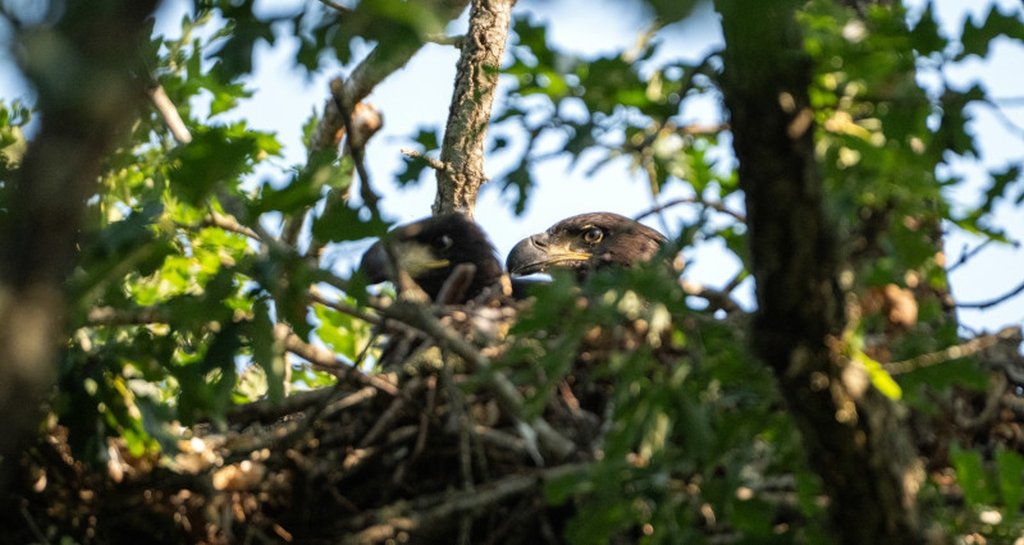
Two of this year’s chicks came from the same pair, while the third was produced by a second breeding pair. The programme now has five established pairs, two of which successfully bred in 2026.
There is still considerable work ahead before the population can be considered secure. Electrocution from power lines has been a significant cause of mortality among released birds, prompting the project to support modifications to more than 500 electricity pylons.
Nevertheless, producing three wild-born chicks just five years after the project began is an encouraging result for a species that had disappeared as a Spanish breeding bird.
Original source: GREFA — Proyecto Pigargo records the birth of three chicks
Read some history about this re introduction scheme here.
2. Spain completes the restoration of 84 hectares of wetland near Doñana
The good news: an important piece of the Guadalquivir wetland system is being restored.
On 16 September, Spain’s Ministry for Ecological Transition announced the completion of restoration work covering 84 hectares in the Brazo del Este Natural Area, in Seville province.
The project has focused on the former river meanders of Quintanilla and El Capitán, part of the old network of channels associated with the Guadalquivir estuary. Agricultural transformation had altered the area’s natural water movements, leaving it heavily dependent on drainage from nearby rice fields.
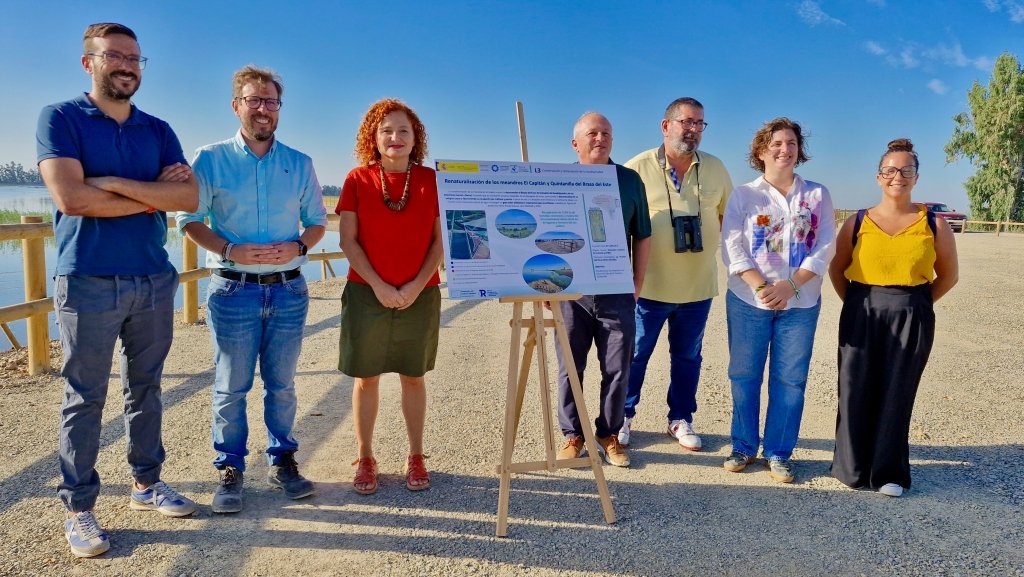
The work, which began in April and was completed in July, involved more than €800,000 of investment. It included reconnecting water channels, creating a lagoon with different depths and shoreline habitats, and installing platforms for observing birds.
The restoration is also relevant to the conservation of the marbled teal, a threatened Mediterranean duck. Water management and suitable seasonal flooding are important to providing the habitat it needs to breed.
Brazo del Este is not the same as Doñana National Park, but it forms part of the wider wetland landscape of the lower Guadalquivir. Improving its hydrology could benefit birds and other wildlife using this important area of southern Spain.
Restoration work does not guarantee that populations will recover, but rebuilding natural water systems is an important step towards making these wetlands more resilient.
Original source: MITECO — restoration of 84 hectares of wetland near Doñana
Explore the Doñana National Park
3. Almost 500 Montseny brook newts released into Catalan streams
The good news: conservationists are expanding the recovery effort for an amphibian found nowhere else in the world.
A total of 491 Montseny brook newts (Calotriton arnoldi) were released into four streams in the Montseny Natural Park in 2026, according to a report published by EUROPARC Spain on 7 September.
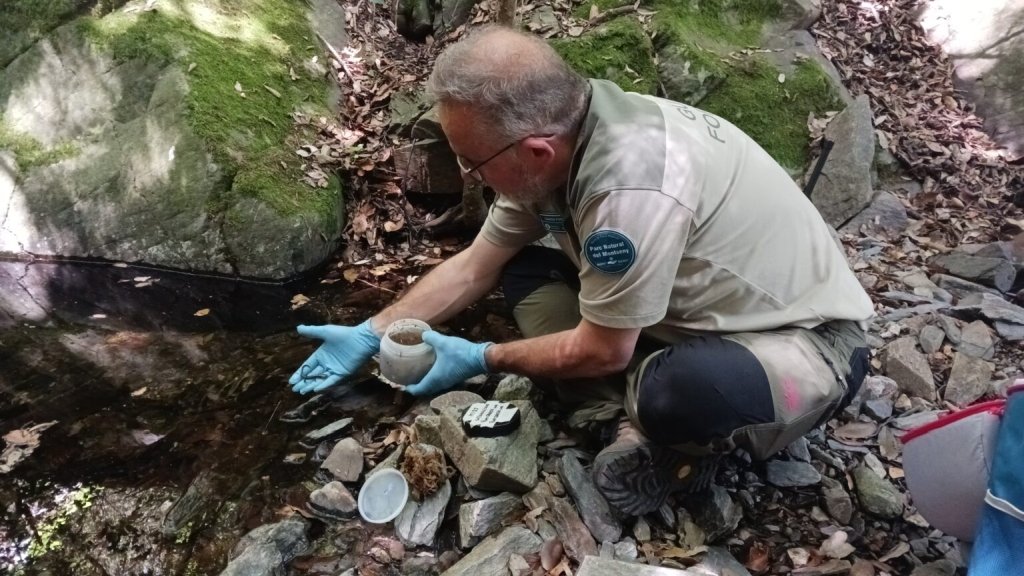
The releases form part of a long-running recovery programme for this exceptionally localised amphibian, which is classified as Critically Endangered by the International Union for Conservation of Nature.
The species is endemic to the Montseny massif in Catalonia. Its natural distribution is restricted to a small number of mountain streams, making it particularly vulnerable to changes in water availability, habitat quality and other local pressures.
Since 2010, a total of 4,722 newts have been bred and released into the wild through the programme. The animals come from captive-breeding work involving several wildlife centres and zoos.
Monitoring during 2026 recorded 53 individuals during more than 30 surveys. Particularly encouragingly, newts descended from earlier releases were observed reproducing in two streams.
That does not yet mean the new populations are self-sustaining, but successful reproduction in the wild is an important step towards that goal.
The story illustrates why conservation sometimes focuses on species that most people have never heard of. Protecting Spain’s biodiversity involves safeguarding small, highly specialised animals as well as its better-known eagles, vultures and mammals.
Original source: EUROPARC Spain — almost 500 Montseny brook newts reintroduced
Read more about the Montseny Natural Park
4. Wildfire devastates a major black vulture breeding area in Ávila
The bad news: a summer fire killed around 100 black vulture chicks.
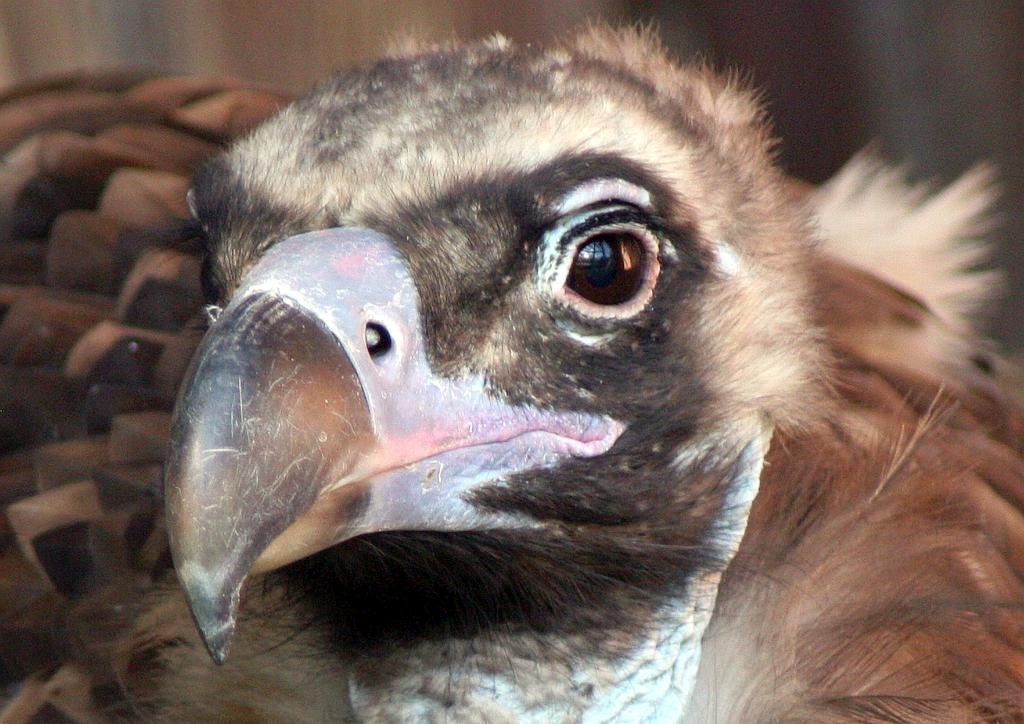
A report published by El País on 12 September examined the impact of the Burgohondo wildfire in Ávila province on the black vulture population of the Valle de Iruelas nature reserve.
The fire burned more than 33,000 hectares according to preliminary regional figures, affecting areas around one of Castilla y León’s most important breeding colonies of black vultures.
The report estimated that around 100 chicks died in the fire. The loss is particularly concerning because the black vulture is a large, slow-reproducing scavenger. Adults invest considerable time and energy in raising a single chick, so the loss of breeding birds and young can have consequences beyond the immediate fire season.
The incident also highlights a difficulty in assessing wildfire damage. The burned area alone does not tell us how many animals died, how many nests were destroyed or how quickly habitats can recover. Those questions require follow-up surveys after the flames have gone.
Spain’s forest fires affect far more than trees and vegetation. They can destroy breeding habitat, kill animals unable to escape, and alter the availability of food and shelter for years afterwards.
Original report: El País — the Burgohondo wildfire killed around 100 black vulture chicks
Read more about the black vulture in Spain.
5. Spain refers the shooting of an orca known as Toñi to prosecutors
The bad news: a protected marine mammal was apparently shot at sea.
On 2 September, Spain’s Ministry for Ecological Transition announced that it had passed the results of its preliminary investigation into injuries sustained by an orca known as Toñi to the environmental prosecutor and the Guardia Civil.

Toñi is one of the oldest known members of the orca population associated with the Strait of Gibraltar and the Gulf of Cádiz. Marks consistent with shotgun pellets were discovered on her dorsal fin in August.
The ministry said its investigation pointed towards a Spanish-flagged vessel that had allegedly fired the shots in Portuguese waters. The authorities were seeking to identify those responsible and investigate the circumstances.
At the time of the announcement, Toñi had been sighted in Galician waters with her group, and the ministry reported that her injuries appeared to be healing favourably.
The case is a reminder that the threats facing marine wildlife are not limited to accidental entanglement, pollution and collisions with vessels. Deliberate harm to protected animals is also a serious concern.
The referral to prosecutors is not a finding of guilt, and the investigation must establish what happened. Nevertheless, the case attracted attention because of Toñi’s age and the importance of the Strait of Gibraltar and Gulf of Cádiz to the region’s orca population.
Original source: MITECO — investigation into the injuries suffered by the orca Toñi
Find out about the orcas that live in Spanish waters.
6. Red kites show encouraging signs of recovery in southwestern Spain
The good news: a conservation project has helped establish a breeding population where very few pairs remained.
On 23 September, the Spanish news agency EFE reported encouraging results from a project to recover the red kite (Milvus milvus) in the border region between Badajoz and Huelva.
The LIFE Eurokite project, implemented with the involvement of AMUS (Acción por el Mundo Salvaje), began in 2020 when only two or three breeding pairs reportedly remained in the area.
Between 2022 and 2025, 126 red kites were released as part of the recovery effort. By 2026, monitoring had recorded 11 breeding pairs and seven chicks.
The red kite is classified as Endangered in Spain, so the development represents a meaningful step towards establishing a more stable local population. The aim is not simply to release birds but to create a population capable of surviving and reproducing without indefinite intervention.
The results also underline the importance of continued monitoring. Numbers of released birds are only one measure of success; breeding, survival and the establishment of future generations matter just as much.
Original report: EFE — recovery of red kites in southwestern Spain
7. Thousands of birds remain at risk from electricity infrastructure
The ongoing problem: electrocution and collisions continue to threaten Spanish birdlife.
At the Spanish and Iberian Ornithology Congress in September, conservationists, researchers, government representatives and electricity-sector specialists discussed the continuing impact of power lines on wild birds.
SEO/BirdLife highlighted two distinct problems: electrocution on dangerous electrical supports and collisions with overhead wires. Both can affect threatened species, particularly birds of prey and birds living in open agricultural landscapes.
The risks are not evenly distributed. Certain pylons and stretches of wire are much more dangerous than others, depending on their design, location and the movements of birds through the landscape.
That means targeted intervention can make a difference. Modifying dangerous pylons, improving the visibility of wires and identifying high-risk locations are among the measures used to reduce mortality.
The issue also connects directly with the white-tailed eagle recovery programme described earlier. GREFA reports that electrocution has been a major cause of death among released white-tailed eagles, and more than 500 pylons have been modified through the project.
September’s discussions did not announce a nationwide solution, but they highlighted a persistent conservation problem for which practical measures already exist.
Original source: SEO/BirdLife — the impact of electricity lines on birdlife
What September tells us about wildlife in Spain
The month’s stories show both the progress and the difficulties involved in conserving Spain’s wildlife.
There is encouraging evidence that carefully managed reintroduction programmes can produce results. White-tailed eagles have bred in the wild, red kites are establishing a stronger presence in southwestern Spain, and Montseny brook newts are reproducing in streams where earlier releases have taken place.
Wetland restoration also offers a practical way to improve habitats, although its long-term value will depend on water availability, management and whether threatened species respond positively.
At the same time, the wildfire losses in Ávila, the injuries suffered by Toñi the orca and the continuing danger from electricity infrastructure show how vulnerable wildlife remains to human activity.
None of these stories, taken alone, provides a complete picture of Spain’s conservation progress. Together, however, they illustrate why long-term monitoring, habitat protection and practical conservation work matter.
Spain’s wildlife story is not simply one of decline or recovery. In many places, both are happening at the same time.
This round-up covers selected wildlife and conservation developments reported between 1 and 30 September 2026. It is not an exhaustive list of every wildlife story published during the month.

Clive Muir – Wildside Holidays – Walking, wildlife and culture holidays in Spain
I’ve been living in western Andalucía for more than 20 years and spend much of my time researching and running English-language travel websites about Spain. My work covers destinations including Cádiz, Ronda, Grazalema and the Caminito del Rey, as well as Wildside Holidays, which focuses on walking, wildlife and nature travel in Spain.
Through Wildside Holidays, I share practical information about Spain’s natural parks, mountains, wildlife and walking destinations, drawing on many years of living and travelling in the country. The aim is to help visitors discover Spain’s natural landscapes responsibly and plan rewarding walking and wildlife experiences.