- Region: Andalucía
- Province: Córdoba
- Protected designation: Natural Park, declared in 1989
- Surface area: 38,449 hectares
- Nearest towns: Cardeña, Montoro and Villanueva de Córdoba
Points of interest
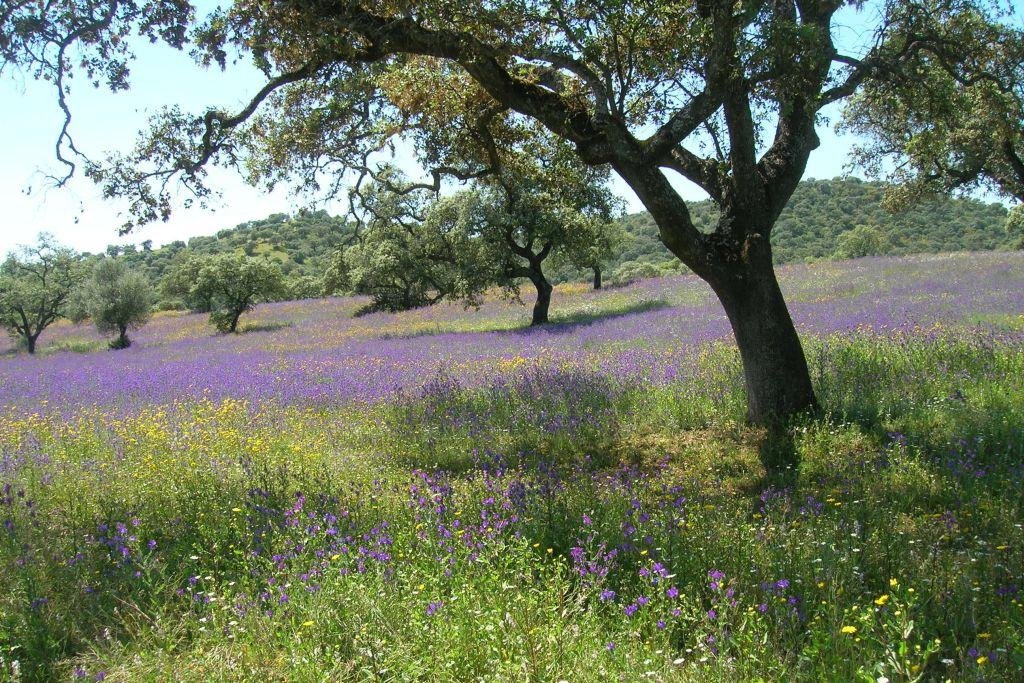
The Sierra de Cardeña y Montoro Natural Park occupies part of the eastern Sierra Morena in northern Córdoba province. Its landscape is characterised by gently rolling hills, open dehesa woodland, Mediterranean scrub and extensive granite outcrops. These large rounded granite formations, locally known as bolos, are a distinctive feature of the area.
The highest point is La Colmena, at 828 metres. The park borders the province of Jaén, where the deeply dissected valley of the River Yeguas separates it from the Sierra de Andújar Natural Park. Holm oak and cork oak woodland, cultivated land and natural scrub create a varied landscape that supports an important range of Mediterranean wildlife.
The Sierra de Cardeña y Montoro is particularly important for the conservation of the Iberian lynx (Lynx pardinus). The park forms part of the wider Andújar–Cardeña area, one of the historic strongholds of this endangered wild cat. The population has recovered considerably thanks to decades of conservation work, and the wider Sierra Morena Oriental population in Andalucía recorded 613 lynxes in 2025.
The Iberian wolf (Canis lupus signatus) also has an important place in the natural history of this area. However, its fortunes have been very different. Although wolves survived in the Sierra Morena until relatively recently, the Junta de Andalucía reported in 2025 that the species had become extinct in the wild in Andalucía, with no confirmed wild population remaining. Its former presence is an important part of the park’s ecological history, but it should not be confused with its current wildlife.
Accommodation Options in Sierra de Cardeña y Montoro
Accommodation near Sierra de Cardeña y Montoro Natural Park from Booking.com
Accommodation around the Sierra de Cardeña y Montoro Natural Park is mainly made up of rural guesthouses, traditional village hostels, country houses and converted cortijos. There are options both within the natural park and in the surrounding towns, although choosing the right base depends on which part of the area you intend to explore.
Cardeña and Venta del Charco are particularly convenient for visitors interested in the northern part of the park, its dehesa woodland and the local walking routes. Accommodation includes village guesthouses and rural apartments, as well as larger country properties in the surrounding countryside.
Montoro, on the southern side of the park, offers a wider range of services, restaurants and accommodation. There are traditional hotels, rural apartments and converted country properties in the surrounding hills and olive-growing countryside.
Villanueva de Córdoba, in the neighbouring Los Pedroches region, is another useful base, particularly for visitors combining a visit to the natural park with exploring the extensive oak dehesa landscapes of northern Córdoba.
You can compare accommodation around the natural park and nearby villages using the Booking.com search below. Check the location carefully when booking, as some properties listed for the wider area may involve a considerable drive to reach particular walking routes or wildlife observation areas.
Flora
The vegetation of the Sierra de Cardeña y Montoro reflects its position within the Sierra Morena and the varied conditions found across its hills, valleys and highland plateaus. Dehesa woodland, dominated by Holm and Cork oaks, is one of the characteristic landscapes, with open pasture beneath the trees and areas of denser Mediterranean scrub.

One particularly interesting feature is the woodland of Pyrenean oak (Quercus pyrenaica) found on the more humid plateau near Cardeña. It is an unusual habitat in Córdoba province, where the cooler and wetter local conditions allow this oak to grow alongside shrubs such as rockrose and lavender.
The Mediterranean undergrowth includes Kermes oak (Quercus coccifera), several species of rockrose (Cistus spp.), lentisc (Pistacia lentiscus), rosemary (Salvia rosmarinus, formerly Rosmarinus officinalis), wild olive (Olea europaea var. sylvestris) and strawberry tree (Arbutus unedo).
These shrubs provide food and shelter for birds, insects and mammals, while adding to the diversity of habitats beneath the oak woodland.
There are also areas of reforested Stone pine (Pinus pinea) and Maritime pine (Pinus pinaster). Along the rivers and streams, the vegetation changes to species better adapted to damp conditions, including willows, ash trees, black poplars and alders. Oleanders are also found along some watercourses, adding colour to the riverbanks during the flowering season.
These contrasting habitats, from dry Mediterranean scrub to damp river corridors, contribute to the botanical diversity of the natural park.
Fauna
The Mediterranean woodland and scrub provide habitat for a varied community of mammals. Red deer, fallow deer and roe deer are found across the park, alongside wild boar. Other native mammals include foxes, badgers, Egyptian mongooses, genets, stone martens, wildcats and weasels. Hares and rabbits are also important members of the ecosystem, providing food for predators such as the Iberian lynx.
Otters inhabit the rivers and waterways, particularly the River Yeguas, where the combination of water, bankside vegetation and relatively undisturbed habitat provides suitable conditions for this elusive mammal.
The Sierra de Cardeña y Montoro is an important area for birds of prey, with several impressive species associated with its Mediterranean woodland, open dehesa and rocky river valleys.
Among the most notable are the Spanish imperial eagle (Aquila adalberti), golden eagle (Aquila chrysaetos), Bonelli’s eagle (Aquila fasciata) and booted eagle (Hieraaetus pennatus). Black vultures (Aegypius monachus) and griffon vultures (Gyps fulvus) are also important birds of the area. Other raptors include goshawks, sparrowhawks, buzzards, kestrels and peregrine falcons.
The park also supports several nocturnal birds of prey, including eagle owls (Bubo bubo), tawny owls (Strix aluco) and long-eared owls (Asio otus). These birds are generally much easier to hear than to see.
The rivers and streams provide a different habitat for wildlife. Kingfishers can be found along suitable stretches of water, while the riverbanks and surrounding vegetation support birds such as nightingales, warblers and wrens. Dippers are also associated with clean, flowing water and may be encountered along suitable stretches of the river system.
The Spanish pond terrapin (Mauremys leprosa) inhabits freshwater environments in the region, and native fish include barbel, which are adapted to life in the rivers and streams of southern Spain.
Reptiles and amphibians are also part of the park’s wildlife. Mediterranean habitats provide suitable conditions for ocellated lizards (Timon lepidus), Iberian wall lizards (Podarcis spp.) and several species of snake. In wetter areas, streams and seasonal pools support amphibians such as Iberian painted frogs (Discoglossus galganoi), Mediterranean tree frogs (Hyla meridionalis) and Iberian ribbed newts (Pleurodeles waltl). These animals are particularly active during the warmer months or following periods of rain.
Embalse de Tejoneras: Birdwatching in the Natural Park
The Embalse de Tejoneras is one of the most interesting places for birdwatching in the Sierra de Cardeña y Montoro Natural Park. Situated among the dehesa woodlands in the northern part of the park, this relatively small reservoir provides an important wetland habitat.
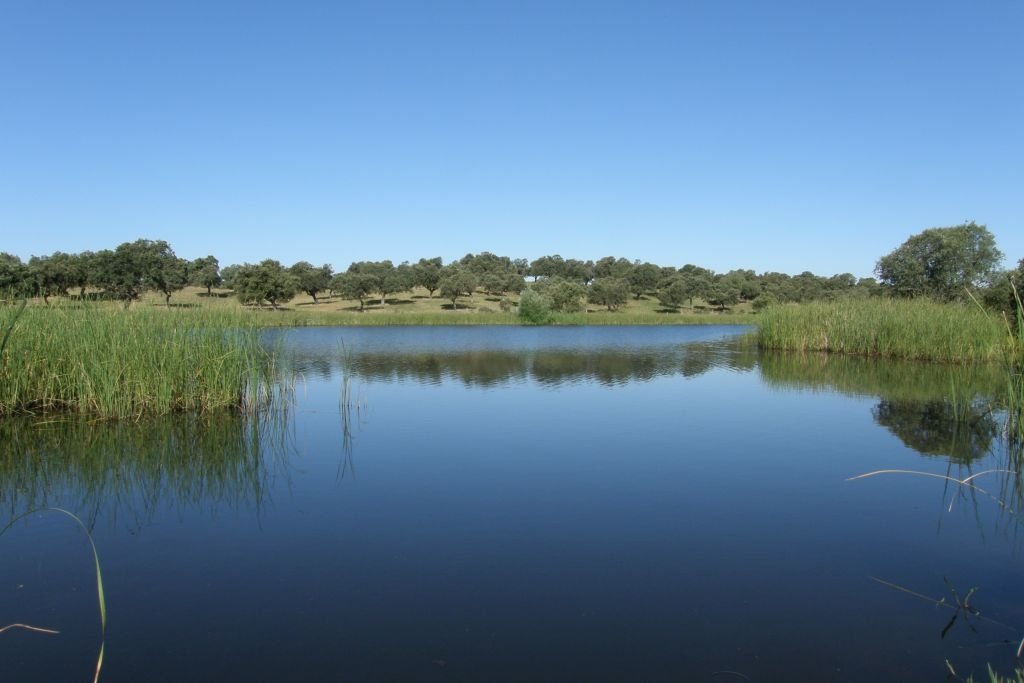
A purpose-built wooden bird hide overlooks the reservoir, allowing visitors to watch the wildlife without disturbing it. Information panels help identify the different species. Birds recorded in the area include Grey Herons, Black Storks, Coots, Mallards, Little Grebes, Great Crested Grebes, Cormorants and various species of duck.
The surrounding dehesa woodland is also worth exploring, with opportunities to see birds of prey including Spanish Imperial Eagles, Golden Eagles and Black Vultures.
For visitors wanting to combine birdwatching with a walk, the nearby Dehesa Yeguas–Embalse de Tejoneras trail passes through the surrounding oak woodland and pastureland.
Bring binoculars and allow some time at the bird hide. As with any wetland, the species present will depend on the season and water levels.
Tours in the province of Cordoba over at Get Your Guide
The Sierra de Cardeña y Montoro is best explored independently, but visitors staying in the wider Córdoba province may also be interested in guided tours and local experiences. The selection below includes activities and excursions around Córdoba and the surrounding region. Check the locations carefully, as not all tours operate near the natural park itself.
Also in the area: Mining history and ancient remains
The countryside around the Sierra de Cardeña y Montoro has a long history of human settlement, mining and agriculture. The area’s archaeological remains provide an interesting contrast to its natural landscapes and are worth exploring if you have time to visit the surrounding villages.
Around Venta del Charco, there is evidence of historic mining activity, including the extraction of tin, copper and lead. The area was also occupied during the Iberian and Roman periods. Archaeological discoveries at Azuel include Roman coins and silver Iberian vessels, while Torrubia is known for megalithic burial remains dating from the Metal Ages.
These scattered remains offer a glimpse into the communities that lived and worked in this part of the Sierra Morena long before the area became a protected natural park.
Visitor centre and tourist information
Centro de Visitantes Venta Nueva, just outside Cardeña at Km 79 on the A92.
The Centro de Visitantes Venta Nueva, located just outside Cardeña, introduces visitors to the landscapes and wildlife of the Sierra de Cardeña y Montoro Natural Park. Its exhibition explains the characteristic Mediterranean environments of the area, including the extensive dehesa woodlands, Mediterranean scrub and pine forests.
It provides useful background for understanding the natural park before exploring its walking routes and surrounding countryside.
Visitor centre opening times and availability can change, so check locally before making a special journey. (Tourist office in Cardeña here in Spanish)
Walking the Cardeña–Aldea del Cerezo trail
One of the main walking routes in this part of the natural park is the Cardeña–Aldea del Cerezo trail. Starting just outside Cardeña, the route follows tracks through open dehesa woodland, where Holm oaks dominate the landscape alongside occasional cork oaks, gall oaks and Pyrenean oaks. Livestock grazing is part of the traditional landscape, and walkers may see sheep and cattle feeding beneath the trees.
The route is approximately 6 km one way and takes around two hours, with an easy difficulty rating. It finishes at Aldea del Cerezo, a small rural settlement whose traditional buildings make use of the area’s abundant granite.
For walkers wanting a longer excursion, the trail network continues towards Azuel, passing distinctive granite outcrops known locally as bolos and lomos de ballena (whale backs). These rounded rock formations are among the most recognisable geological features of the area.
For route details and official walking information, see the Junta de Andalucía’s Cardeña–Aldea del Cerezo trail guide.
Frequently Asked Questions about Sierra de Cardeña y Montoro
The Sierra de Cardeña y Montoro is a protected natural park in the Córdoba province of Andalusia, Spain. Declared a natural park in 1989, it spans 38,449 hectares. The park features rolling hills, granite boulder outcrops, and a diverse mix of forests and Mediterranean scrubland. It forms part of the Sierra Morena mountain range and plays a key role in regional biodiversity.
The park includes gentle hills, batholithic granite formations, cultivated fields, and forested zones. Its highest point is La Colmena, standing at 828 metres. The deeply ravined River Yeguas separates it from the nearby Andújar Natural Park in Jaén. The landscape transitions between dehesa pastureland, Mediterranean scrub, and oak woodlands.
A unique highlight is the Pyrenean oak woodland near Cardeña—the only one in Córdoba province. The park is also home to Holm and Cork oaks, Gall oaks, and Mediterranean shrub species like Kermes oak, rockrose, lentisc, rosemary, wild olive, and strawberry trees. Reforested areas include Stone pine and Maritime pine, while riverbanks feature willow, ash, alder, and oleander.
This natural park shelters a wide range of wildlife. Mammals include Red, Fallow, and Roe deer, Wild boar, Badgers, Foxes, Mongooses, Genets, Stone martens, Wild cats, Weasels, and Hares. It’s also one of the few remaining habitats for endangered species such as the Iberian Lynx. Although present in the past, the Iberian Wolf population is now probably extinct in the area. Birdlife includes raptors like Spanish Imperial Eagles, Bonelli’s Eagles, Golden Eagles, and various owls and vultures.
Birdwatchers can visit the Embalse de Tejoneras reservoir, which includes a bird hide for observing aquatic species. Herons, Egrets, Little Grebes, and migratory waterfowl are commonly seen here. Raptors, including Short-toed Eagles, Black Vultures, and Peregrine Falcons, are also frequently spotted in the park.
Yes, several points of interest offer a glimpse into the region’s ancient past. At Venta del Charco, remnants of Roman and Iberian mining activity can still be found. Roman coins and silver Iberian vessels have been discovered in Azuel, while Torrubia is home to megalithic burial sites dating back to the 3rd century B.C.
The main visitor centre is Centro de Visitantes Venta Nueva, located at km 79 on the A-92 just outside Cardeña. It features exhibitions on the Mediterranean landscape and the local flora and fauna. From this centre, visitors can access the scenic Cardeña–El Cerezo trail, which winds through dehesa woodlands and striking granite formations known as bolos. Additional information is available at the Cardeña tourist office.
There are many options for staying near the park, including rural guesthouses, small hotels, and traditional hostels in towns like Cardeña, Montoro, and Villanueva de Córdoba. These accommodations often provide direct access to nature trails and wildlife viewing areas. Check Booking.com to compare prices, view guest reviews, and book your stay.
Wildside Holidays offers detailed guides to Spain’s natural and national parks, including flora, fauna, and conservation information. The site also connects readers with trusted tour providers for hiking, birdwatching, and wildlife-focused holidays. You’ll also find English-language resources on popular destinations such as Ronda, Cádiz, the Sierra de Grazalema, and the Caminito del Rey.

Clive Muir – Wildside Holidays – Walking, wildlife and culture holidays in Spain
I’ve been living in western Andalucía for more than 20 years and spend much of my time researching and running English-language travel websites about Spain. My work covers destinations including Cádiz, Ronda, Grazalema and the Caminito del Rey, as well as Wildside Holidays, which focuses on walking, wildlife and nature travel in Spain.
Through Wildside Holidays, I share practical information about Spain’s natural parks, mountains, wildlife and walking destinations, drawing on many years of living and travelling in the country. The aim is to help visitors discover Spain’s natural landscapes responsibly and plan rewarding walking and wildlife experiences.
Comments are closed.