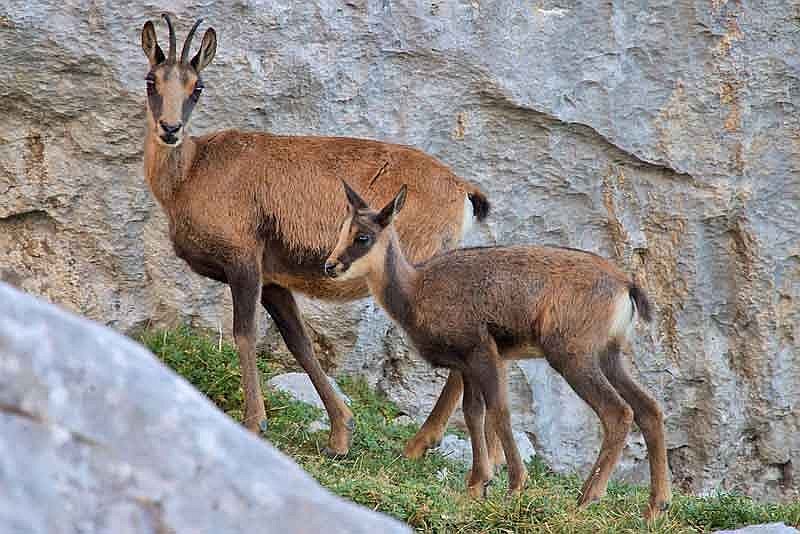
- Spanish: rebeco, gamuza
- Galician: rebezo
- Asturian: robecu/robezu
- Catalan: isard
- Basque: pirinioetako sarrioa
- Aragonese: sarrio, chizardo
- French: izard/isard
- Italian: camoscio dei Pirenei, camoscio appenninico
Pyrenean chamois – Rupicapra pyrenaica – Rebeco is a species of goat-antelope native to the Pyrenees mountains, located between Spain and France. They are well adapted to the harsh mountain environment and are known for their agility and surefootedness.
These animals are about the size of a large dog, with a height at the shoulder of around 70-80 cm (27-31 inches) and a weight of around 30-60 kg (66-132 lbs). The males have long, curved horns that can reach up to 30 cm (12 inches) in length.
The Pyrenean chamois is an herbivore, feeding mainly on grasses, herbs, and shrubs. They are active during the day and tend to stay in higher elevations during the summer months and move to lower elevations during the winter.
The population of Pyrenean chamois has been declining over the years, mainly due to hunting and habitat loss. However, conservation efforts have been put in place to protect this species, and their numbers are slowly recovering. Today, they are a popular target for wildlife watchers and nature enthusiasts who come to see them in their natural habitat in the Pyrenees.
Where to find the Pyrenean chamois – Rupicapra pyrenaica – Rebeco in Spain
The Pyrenean chamois can be observed in several areas of Spain, particularly in the Pyrenees mountains. Some of the best places to see them in Spain include the Ordesa and Monte Perdido National Park, Aigüestortes i Estany de Sant Maurici National Park, and the Pyrenees National Park.
Have a look at The Picos de Europa – Picos Rock and Snow holidays. They know where to find the Pyrenean chamois in the Picos de Europa. https://wildsideholidays.co.uk/the-picos-de-europa-rock-and-snow-wildlife-holiday-houses/
Other great places to observe Pyrenean chamois include the valleys of Arán and Benasque, as well as the French side of the Pyrenees mountains. It’s important to note that sightings of Pyrenean chamois can be challenging, as they are a shy and elusive species, and their population numbers can be low in some areas. However, with patience and a bit of luck, you may be able to spot them in their natural habitat. It’s always recommended to hire an experienced guide or join a wildlife tour to increase your chances of seeing these beautiful animals.
Ronda Today
Everything you need to know before you visit Ronda “The city of dreams” in Andalucia. https://www.rondatoday.com/
Wildside Holidays – Spain
Take a trip on the Wildside! Discover the wildlife and nature of Spain, its Natural and National Parks and find the top wildlife, activity and walking holiday companies.
Iberia Nature Forum
Struggling with identifying those bugs and beasties? Why not check out the Iberia nature Forum!
Discover the Iberia Nature Forum – Environment, geography, nature, landscape, climate, culture, history, rural tourism and travel.

Clive Muir – Wildside Holidays – Walking, wildlife and culture holidays in Spain
I’ve been living in western Andalucía for more than 20 years and spend much of my time researching and running English-language travel websites about Spain. My work covers destinations including Cádiz, Ronda, Grazalema and the Caminito del Rey, as well as Wildside Holidays, which focuses on walking, wildlife and nature travel in Spain.
Through Wildside Holidays, I share practical information about Spain’s natural parks, mountains, wildlife and walking destinations, drawing on many years of living and travelling in the country. The aim is to help visitors discover Spain’s natural landscapes responsibly and plan rewarding walking and wildlife experiences.