Tajo International

Tajo Internacional The river Tagus (known as the Tajo in Spanish and Tejo in Portuguese) is the longest river in Iberia. (1,038 kilometers in length.) Its source in the Albarracín mountains (near Teruel, south Aragon) and the city Lisbon, capital of Portugal, is placed at the estuary where it flows into the Atlantic ocean.
  • Region: Extremadura
  • Province: Cáceres
  • Declared a Natural Park: 2006
  • Park surface area: 25.088 hectares
  • ZEPA 2000. Tajo Internacional y Riberos

Points of interest

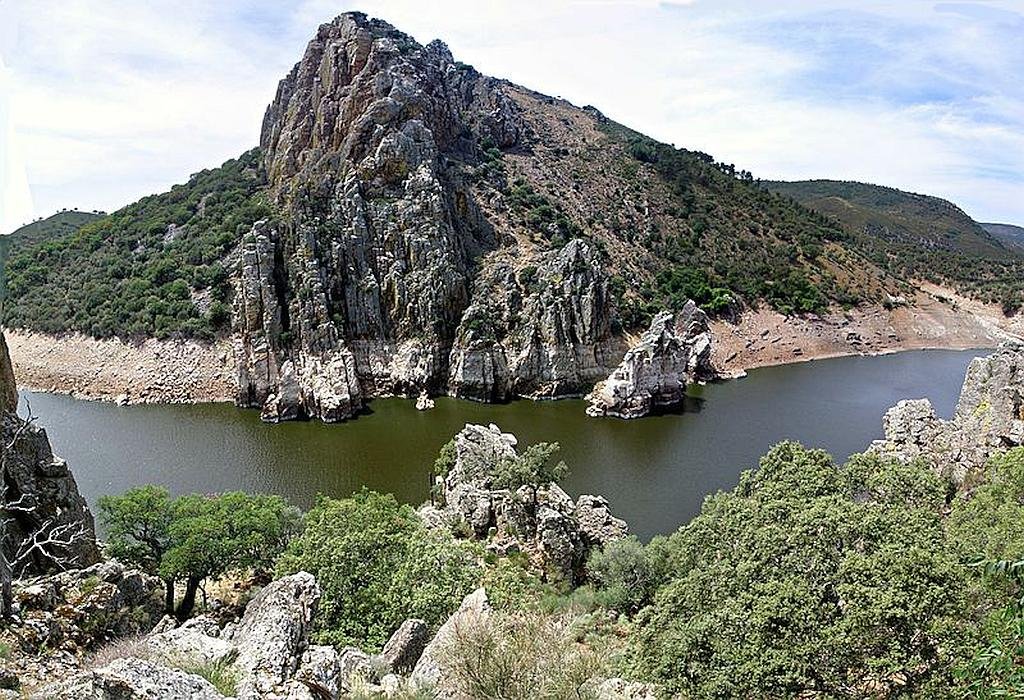
The Tajo International natural park is a relatively recently registered park in Extremadura which was initially partly covered by an area of special protection for birds ZEPA in 2000.

The area is predominantly waterways with steep banks and therefore a haven for wildlife. Two birds in particular that need this tranquility are the Black vulture and Black stork, both of which are endangered species in Spain.

Mediterranean woodland covers the hills with rich vegetation along the water courses.

Read more

Preserving Spain’s Natural Paradises: Unveiling the Threats to National Parks

Ibex Trex Walking Holidays

In the wake of a groundbreaking agreement between the Junta de Andalucía and the Spanish Government concerning the renowned Doñana National Park, a stark reality surfaces for all 16 of Spain’s ecological gems.

Despite a substantial multi million-Euro investment in Doñana, the remaining national parks in Spain grapple with a spectrum of challenges, spanning from drought and unbridled tourism to wildfires and the encroachment of invasive species.

Read more

Monfragüe National Park

The area of Monfragüe National Park is noted for its importance as a breeding area for a selection of rare and protected birds,
  • Region: Extremadura
  • Province: Cáceres
  • Declared a Natural Park: 1979
  • Upgraded to National Park: 2006
  • Park surface area: 18.852 hectares
  • Z.E.P.A (1988) Special Bird Protection Zone
  • Biosphere Reserve 2003

Points of interest

The area of Monfragüe National Park is noted for its importance as a breeding area for a selection of rare and protected birds, Black vulture, Black stork, Imperial eagle and Bonelli’s eagle.

Add to that the worlds most endangered wild cat, the Lynx which also resides here and one can see why it was upgraded from a natural to a national park.

The park altitudes range between 450 – 750m, covering an area 30km long and 7km wide. The habitat types are oak woods, scrub land, rocky out crops, river and reservoir plus dehesa.

The area has also become famous as a starlight destination. The Starlight Foundation is a non-profit organization that was founded in 2009 to promote the protection of the night sky and the development of “astrotourism” and there is an ever growing list of starlight destinations in Spain to visit.

Read more

Grazalema – The emblematic white village of the Sierra

Grazalema - The Sierra de Grazalema

Grazalema is a traditional white village (pueblo blanco) located in the north-eastern area of Cadiz province. It nestles amongst the beautiful mountains of the Sierra de Grazalema natural park and has a local population of around 2000 people inhabiting the village and surrounding countryside. Set in a protected area popular for nature and outdoor enthusiasts … Read more