Spain, a country renowned for its vibrant coastal regions and captivating cities that often overshadow a treasure nestled within its heartland. While the majority of tourists flock to the sun-kissed beaches and bustling metropolises, a vast and sparsely populated interior awaits exploration. So, lets take a journey through the Serranía Celtibérica!
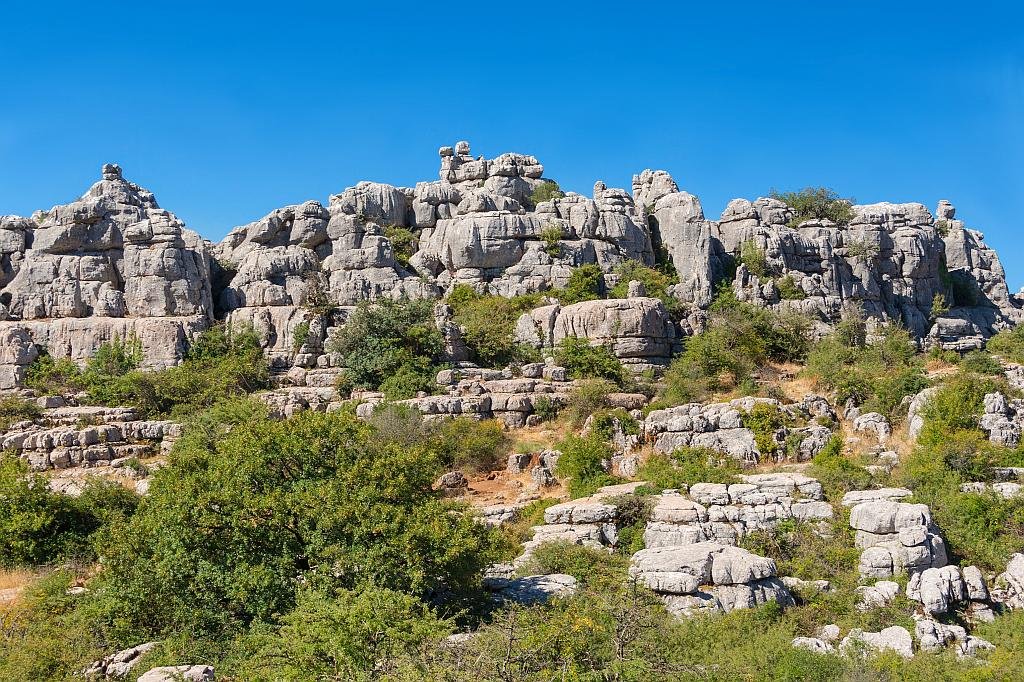
El Torcal Protected Area
- Andalucia – Malaga province – Near Antequera
The dramatic and fascinating landscape of the El Torcal protected area is entrancing. Natural erosion has cut valleys and pathways through this enormous “rock garden” and created erratic sculptures in the process. Thin layers of rock stacked like pancakes are pinned down by massive blocks and this seemingly inhospitable terrain is host to many specialist rock loving plants.
The River Vero Cultural Park in Aragón
The River Vero Cultural Park is a unique space known for its cultural and natural value. This is evident in its nature, landscape, history, art, tradition and dynamism of its inhabitants. It was created in 2001 and includes the towns and villages of Bárcabo, Colungo, Alquézar, Adahuesca, Santa María de Dulcis, Pozán de Vero, Azara, Castillazuelo and Barbastro.
Pinares de Rodeno
Created in 1995, the Pinares de Rodeno protected landscape is located in the Sierra de Albarracín region of Teruel, Aragon. The area covers around 6,829 hectares, with altitudes ranging from 1,095 meters in the Tobías ravine to 1,602 meters at Cruz de Montoyo. Local villages include Albarracín, Bezas, and Gea de Albarracín. Much of the forest grows on red sandstone (rodeno), shaped over time into ravines, taffoni (hemispherical holes in the rock wall), and large circular depressions called pilancones. Limestone areas feature softer relief, higher plateaus, and holm oak forests.