The Brown Bear Population in the Cantabrian Mountains: Facts and Controversies

Wildmoral bear tours

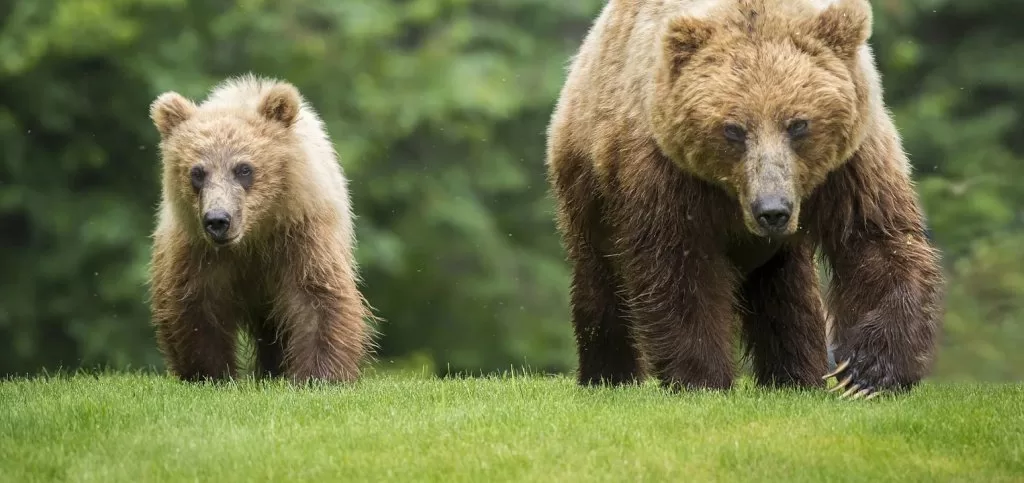
The brown bear population in the Cantabrian Mountains has been a topic of significant discussion and research. Recent data and conflicting reports have sparked debates about the true state of the population and the effectiveness of conservation efforts. This article aims to consolidate information from two contradictory reports to provide a comprehensive overview of the … Read more

First Bearded Vulture in Spain Dies from Wind Turbine Collision

Bearded Vulture - Gypaetus barbatus - Quebrantahuesos

Project Suspension Technicians from the Fundación para la Conservación del Quebrantahuesos (FCQ) and nature protection agents from the Government of Aragón found the mutilated carcass of the bearded vulture “Masía” beneath the blades of a wind turbine in the Refollas wind complex, located in Castellón. The body was found in the Teruel municipality of Luco … Read more

Iberian lynx (Lynx pardinus) Lince Ibérico

Iberian lynx Mammals of Spain - Reintroducion of Iberian lynx. Wildlife, natural parks and culture in Spain

Overview

Lynx pardinus (Felis pardina or pardinus, Felis lynx pardina, Lynx lynx pardina)… Too many names!

Once found throughout Spain and Portugal. the Iberian lynx began to decline in the first half of the 20th century due to over hunting and trapping for the fur trade. This decline was hugely accelerated after the 1950’s with the spread of myxomatosis. A disease which decimated populations of the European rabbit, the lynx’s main prey.

From the 1980’s the Iberian lynx was considered by IUCN (the International Union for the Conservation of Nature) to be critically endangered and became known as the world’s most threatened cat species.

However, as a result of the increasing population size, the Iberian Lynx no longer qualifies for IUCN Critically Endangered status and is therefore listed as Endangered under criterion D. The improved status of this species is all due to various intensive and ongoing conservation programs.

Current populations and programs

Read more

The Barbary sheep (Ammotragus lervia)

The Barbary sheep (Ammotragus lervia)

The Barbary sheep (Ammotragus lervia), also known as the arrui, is a species of wild sheep native to the arid regions of North Africa, including the Atlas Mountains and the Sahara Desert. It was introduced into Spain in the 1970s for hunting purposes. It has since established populations in several regions of the country, such as Andalusia, Castilla-La Mancha, and Murcia feeding on grasses, bushes, and lichens.

The largest free-range population in Spain is found in the Southeast of Spain, mostly from the Sierra Espuña to the Sierra Cazorla.

In Spanish the barbary sheep is called arruí, muflón del Atlas or carnero de berbería.

Read more

Related Posts
  1. Coolest Places To Stay In London
  2. Unusual Day Trips From London
  3. Things To Do In London On A Budget
  4. London Expensive
  5. Hidden Places In London
  6. London City Trip Planner
  7. Best Shopping In London England
  8. Transport In London
  9. Best London Neighborhoods For Families
  10. First Trip To London