- Family: Nymphalidae
- Scientific name: Charaxes jasius
- English common name: Two-tailed Pasha
- Spanish common name: Bajá de dos colas
In flight, the Two-tailed Pasha – Charaxes jasius – Bajá de dos colas is a fast moving, large, darkly coloured butterfly. At rest the intricate under-wing patterns and 4 tails can be observed.
It is generally localised to hilly areas where the caterpillar food plant of Strawberry tree (Arbutus unedo) is situated.

The butterflies can be seen feeding on ripe fruit such as figs as well as faeces.
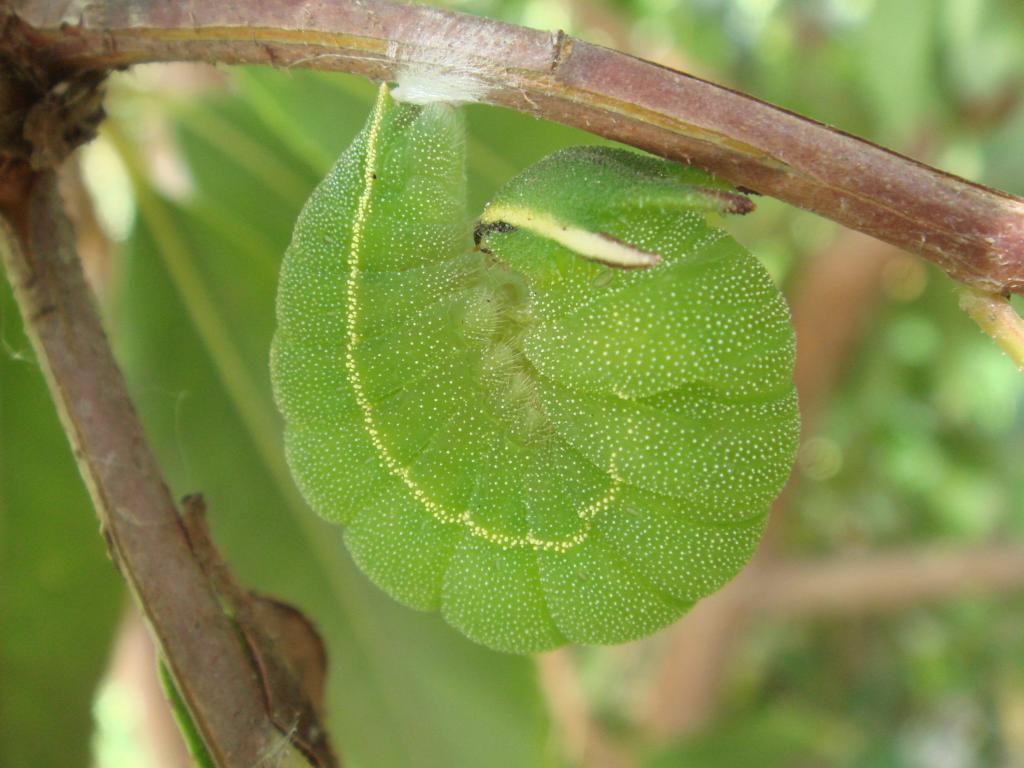
The caterpillar can be up to 6cm in length. It is green with 4 very distinctive backward facing spikes on its head. They create a silk pad on a leaf and return to this after feeding.
- Wing size: 75-80mm
- Altitude: sea level to 600m
- Flight time: May-June and August-October in two broods
- Over-wintering: As a caterpillar.
- Caterpillar food plant: Arbutus unedo
- Distribution: Southern Iberia and around the Mediterranean basin.
- Similar species: there are no similar species within Europe
These fantastic images of theTwo-tailed Pasha – Charaxes jasius – Bajá de dos colas were taken in Grazalema by Sue Eatock and show the life cycle from egg to butterfly.




The Grazalema Guide
The best way to see all our web projects in one place is over at the Grazalema Guide.
The Grazalema Guide – Tourist Information Portal for the Sierra de Grazalema, Wildside Holidays, the town of Ronda and the Caminito del Rey.

Clive Muir – Wildside Holidays – Walking, wildlife and culture holidays in Spain
I’ve been living in western Andalucía for more than 20 years and spend much of my time researching and running English-language travel websites about Spain. My work covers destinations including Cádiz, Ronda, Grazalema and the Caminito del Rey, as well as Wildside Holidays, which focuses on walking, wildlife and nature travel in Spain.
Through Wildside Holidays, I share practical information about Spain’s natural parks, mountains, wildlife and walking destinations, drawing on many years of living and travelling in the country. The aim is to help visitors discover Spain’s natural landscapes responsibly and plan rewarding walking and wildlife experiences.